


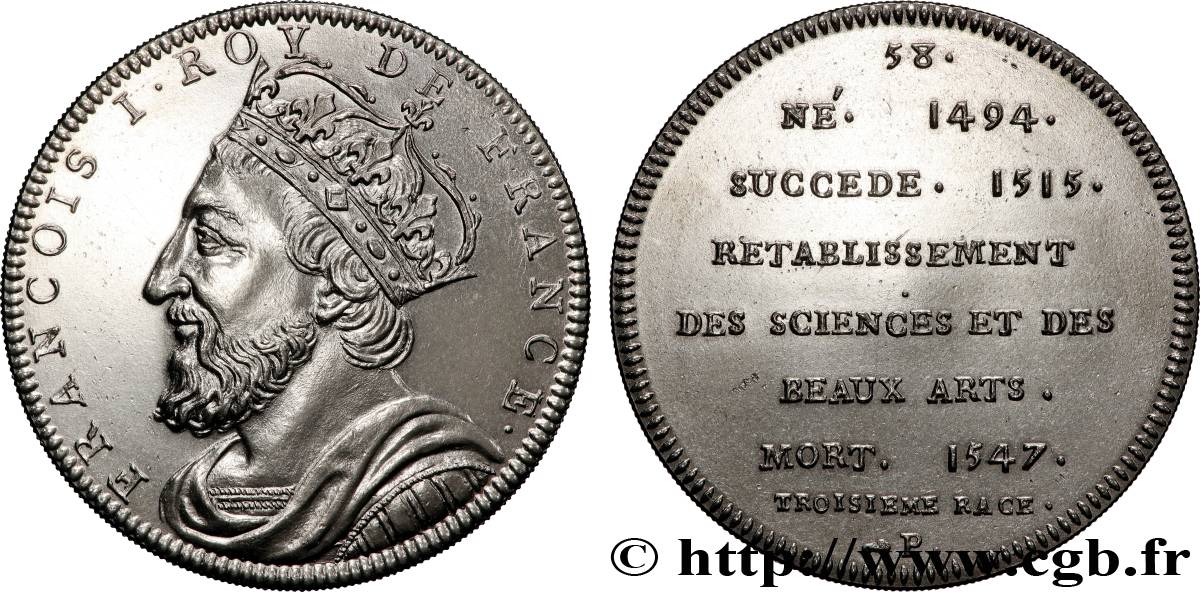
E-auction 660-683983 - fme_1066317 - SÉRIE MÉTALLIQUE DES ROIS DE FRANCE Médaille, François Ier - 58 - refrappe ultra-moderne
Sie müssen angeschlossen sein und von cgb.fr genehmigt werden, um in einer E-Auktion teilzunehmen.Melden Sie sich an, um zu wetten..Die Kontobestätigungen sind innerhalb von 48 Stunden nach Ihrer Anmeldung gemacht.Warten Sie nicht bis die letzten zwei Tage vor dem Abschluss eines Verkaufs, um Ihre Registrierung abzuschließen. Klickend "BIETEN" verpflichten Sie sich vertraglich, diesen Artikel zu kaufen und Sie nehmen ohne Reserve die allgemeinen Verkaufsbedingungen für den e-auctions zu cgb.fr an.
Der Verkauf wird an der Zeit auf der Übersichtsseite angezeigt geschlossen werden. Angebote, die nach der Schließung Zeit empfangen sind, werden nicht gültig.
Bitte beachten Sie, dass die Fristen für die Einreichung Ihres Angebots auf unsere Server können variieren und es kann zur Ablehnung Ihres Angebots entstehen, wenn es in den letzten Sekunden des Verkaufs gesendet wird. Die Angebote sollen mit ganzer Zahl ausgeführt sein, Sie können Kommas oder des Punktes in Ihrem Angebot nicht erfassen. Bei Fragen klicken Sie hier, um einen Blick auf die FAQ E-Auktionen.
KEINE ANSCHAFFUNGSKOSTEN FÜR DIE KÄUFER.
KEINE ANSCHAFFUNGSKOSTEN FÜR DIE KÄUFER.
| Schätzung : | 12 € |
| Preis : | 6 € |
| Höchstgebot : | 6 € |
| Verkaufsende : | 08 Dezember 2025 20:00:00 |
| Bieter : | 4 Bieter |
Type : Médaille, François Ier - 58 - refrappe ultra-moderne
Datum: n.d.
Metall : versilberte Bronze
Durchmesser : 34 mm
Stempelstellung : 12 h.
Gewicht : 20,88 g.
Rand cannelée
Punze : corne d’abondance
Seltenheitsgrad : R1
Kommentare zum Erhaltungszustand:
Patine hétérogène avec des traces de rayures et de manipulation
Vorderseite
Titulatur der Vorderseite FRANCOIS I ROY DE FRANCE..
Beschreibung Vorderseite Buste couronné à gauche.
Rückseite
Titulatur der Rückseite 58. / NÉ 1494. / SUCCEDE 1515. / RETABLISSEMENT / DES SCIENCES ET DES / BEAUX ARTS. / MORT. 1547. / TROISIEME RACE. / P..
Beschreibung Rückseite Légende en huit lignes et corne d’abondance à l’exergue.
Kommentare
Philippe Ier de France, né en 1052, mort le 30 juillet 1108 au château de Melun en Seine-et-Marne, fut roi des Francs de 1060 à 1108, quatrième de la dynastie dite des Capétiens directs.
Il est le fils d'Henri Ier, roi de France, et d'Anne de Kiev
Philippe est sans doute le premier prince en Europe occidentale à recevoir ce prénom qui allait se perpétuer jusqu'à nos jours. Il le doit à sa mère, Anne de Kiev, dont l'arrière grand-père paternel Romain II, empereur de Constantinople, affirmait descendre des rois de Macédoine.
Couronné à Reims le 23 mai 1059 du vivant de son père, Philippe Ier ne règne seul qu’à partir de 1066, car son oncle, le comte de Flandre Baudouin V, assisté de l’archevêque de Reims Gervais de Belleme ainsi que, dans un premier temps, d'Anne de Kiev, exerce la régence de la mort d'Henri Ier en 1060 à 1066. Il sera couronné plusieurs fois dans son règne, par exemple le 25 décembre 1071, par l'évêque Élinand, en la cathédrale Notre-Dame de Laon comme le voulait la coutume de son temps.
Pour la suite de la biographie, voir http://fr.wikipedia.org/wiki/Philippe_Ier_de_France.
Philip I of France, born in 1052 and died on July 30, 1108, at the Château de Melun in Seine-et-Marne, was King of the Franks from 1060 to 1108, the fourth of the dynasty known as the direct Capetians. He was the son of Henry I, King of France, and Anne of kyiv. Philip is probably the first prince in Western Europe to receive this first name, which would continue to this day. He owes it to his mother, Anne of kyiv, whose paternal great-grandfather, Romanus II, Emperor of Constantinople, claimed descent from the kings of Macedonia. Crowned in Reims on 23 May 1059 during his father's lifetime, Philip I only reigned alone from 1066, because his uncle, the Count of Flanders Baldwin V, assisted by the Archbishop of Reims Gervais de Belleme and, initially, by Anne of kyiv, exercised the regency from the death of Henry I in 1060 to 1066. He was crowned several times during his reign, for example on 25 December 1071, by Bishop Élinand, in the Notre-Dame Cathedral of Laon as was the custom of his time. For the rest of the biography, see http://fr.wikipedia.org/wiki/Philippe_Ier_de_France
Il est le fils d'Henri Ier, roi de France, et d'Anne de Kiev
Philippe est sans doute le premier prince en Europe occidentale à recevoir ce prénom qui allait se perpétuer jusqu'à nos jours. Il le doit à sa mère, Anne de Kiev, dont l'arrière grand-père paternel Romain II, empereur de Constantinople, affirmait descendre des rois de Macédoine.
Couronné à Reims le 23 mai 1059 du vivant de son père, Philippe Ier ne règne seul qu’à partir de 1066, car son oncle, le comte de Flandre Baudouin V, assisté de l’archevêque de Reims Gervais de Belleme ainsi que, dans un premier temps, d'Anne de Kiev, exerce la régence de la mort d'Henri Ier en 1060 à 1066. Il sera couronné plusieurs fois dans son règne, par exemple le 25 décembre 1071, par l'évêque Élinand, en la cathédrale Notre-Dame de Laon comme le voulait la coutume de son temps.
Pour la suite de la biographie, voir http://fr.wikipedia.org/wiki/Philippe_Ier_de_France.
Philip I of France, born in 1052 and died on July 30, 1108, at the Château de Melun in Seine-et-Marne, was King of the Franks from 1060 to 1108, the fourth of the dynasty known as the direct Capetians. He was the son of Henry I, King of France, and Anne of kyiv. Philip is probably the first prince in Western Europe to receive this first name, which would continue to this day. He owes it to his mother, Anne of kyiv, whose paternal great-grandfather, Romanus II, Emperor of Constantinople, claimed descent from the kings of Macedonia. Crowned in Reims on 23 May 1059 during his father's lifetime, Philip I only reigned alone from 1066, because his uncle, the Count of Flanders Baldwin V, assisted by the Archbishop of Reims Gervais de Belleme and, initially, by Anne of kyiv, exercised the regency from the death of Henry I in 1060 to 1066. He was crowned several times during his reign, for example on 25 December 1071, by Bishop Élinand, in the Notre-Dame Cathedral of Laon as was the custom of his time. For the rest of the biography, see http://fr.wikipedia.org/wiki/Philippe_Ier_de_France
Historischer Hintergrund
SÉRIE MÉTALLIQUE DES ROIS DE FRANCE
Diese Serie wurde von Thomas Bernard gestochen und wird für diesen Autor durch das Zeichen Ludwigs XIV. unterbrochen. Die folgenden Token wurden von Nicolas Gatteaux für Ludwig XV., Duvivier für Ludwig XVI., Puymaurin und Gayrard für Ludwig XVII., Puymaurin und Depaulis für Ludwig XVIII. graviert. Die Serie wird oft Jean Dassier über den Glauben von Forrer zugeschrieben, aber er korrigiert seine Behauptung in seinem Band VIII und bestätigt die Archive der Monnaie de Paris, aus denen hervorgeht, dass die Serie von Monsieur de Launay in Auftrag gegeben wurde. Es gibt verschiedene Ausgaben aus Kupfer oder Messing mit unterschiedlichem Gewicht, aber je nach Serie sind die umgekehrten Matrizen manchmal unterschiedlich. Die Klassifizierung der Könige erfolgt nach altem Brauch in drei aufeinanderfolgenden Rassen. Wir bemerken die Existenz eines sehr seltenen Zeichens, das die Abkürzungen erklärt, die wir nur in einer Blechbläserserie gesehen haben. Die Verpackung dieser Serie befand sich in einer Holzröhre. Es ist natürlich sehr schwierig, es zu rekonstruieren, und es sollte beachtet werden, dass die verschiedenen Token sehr unterschiedliche Seltenheiten aufweisen und wahrscheinlich stückweise von der Öffentlichkeit gekauft wurden, was den guten Königen zugute kam. Es gibt mindestens eine Serie in Silber, möglicherweise apokryphisch, vervollständigt bis Napoleon III. mit Symbolen für alle nachfolgenden Regime, einschließlich der Revolution und Napoleon I., siehe MONNAIES 28, Nr. 1395. Diese Serie ist in einem kleinen Buch von Philippe Marinèche dokumentiert. Wer es erwerben kann, kontaktiert phmarineche@aol. com.
 Berichten über einen Fehler
 Die Seite drucken
 Teilen meiner Auswahl
 Stellen Sie eine Frage
 Einlieferung/Verkauf
In Verbindung stehende Artikel
 Details


Ihre zuletzt angesehenen Artikel

GALLIEN - BELGICA - REMI (Region die Reims) Potin au personnage de face, classe
10.00 €

LOUIS XV "THE WELL-BELOVED" Double louis d’or aux écus ovales, tête ceinte d
2002.00 €

LOUIS XV "THE WELL-BELOVED" Louis d’or aux écus ovales, tête ceinte d’un b
3601.00 €

Épreuve uniface de l’avers de 2 francs Napoléon III, tête nue, en bronze ar
480.00 €

SÉRIE MÉTALLIQUE DES ROIS DE FRANCE Médaille, François Ier - 58 - refrappe u
6.00 €
FUNFTE FRANZOSISCHE REPUBLIK Médaille, André Tiraqueau, François Viete, Nicol
30.00 €
cgbfr.de numismatik


