


E-auction 333-248707 - fme_412525 - HENRY III Médaille, Alexandre (Henri III) franchissant le Tigre, refrappe

Sie müssen angeschlossen sein und von cgb.fr genehmigt werden, um in einer E-Auktion teilzunehmen.Melden Sie sich an, um zu wetten..Die Kontobestätigungen sind innerhalb von 48 Stunden nach Ihrer Anmeldung gemacht.Warten Sie nicht bis die letzten zwei Tage vor dem Abschluss eines Verkaufs, um Ihre Registrierung abzuschließen. Klickend "BIETEN" verpflichten Sie sich vertraglich, diesen Artikel zu kaufen und Sie nehmen ohne Reserve die allgemeinen Verkaufsbedingungen für den e-auctions zu cgb.fr an.
Der Verkauf wird an der Zeit auf der Übersichtsseite angezeigt geschlossen werden. Angebote, die nach der Schließung Zeit empfangen sind, werden nicht gültig.
Bitte beachten Sie, dass die Fristen für die Einreichung Ihres Angebots auf unsere Server können variieren und es kann zur Ablehnung Ihres Angebots entstehen, wenn es in den letzten Sekunden des Verkaufs gesendet wird. Die Angebote sollen mit ganzer Zahl ausgeführt sein, Sie können Kommas oder des Punktes in Ihrem Angebot nicht erfassen. Bei Fragen klicken Sie hier, um einen Blick auf die FAQ E-Auktionen.
KEINE ANSCHAFFUNGSKOSTEN FÜR DIE KÄUFER.
KEINE ANSCHAFFUNGSKOSTEN FÜR DIE KÄUFER.
| Schätzung : | 100 € |
| Preis : | 31 € |
| Höchstgebot : | 48 € |
| Verkaufsende : | 02 September 2019 18:12:30 |
| Bieter : | 4 Bieter |
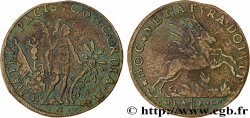
Type : Médaille, Alexandre (Henri III) franchissant le Tigre, refrappe
Datum: (1579)
Name der Münzstätte / Stadt : France
Metall : Bronze
Durchmesser : 43 mm
Stempelstellung : 12 h.
Graveur PILON Germain - DE HERY Claude
Gewicht : 38 g.
Rand lisse + corne BRONZE
Kommentare zum Erhaltungszustand:
Superbe médaille moderne avec une agréable patine
Vorderseite
Titulatur der Vorderseite HENRICVS III D G FRANCORVM ET POL REX.
Beschreibung Vorderseite Buste lauré, drapé et cuirassé d’Henri II à droite.
Rückseite
Titulatur der Rückseite IMAGO TALIS ALEXADRI TIGRIN SVPERANTIS.
Beschreibung Rückseite Le roi paradant à cheval à gauche.
Kommentare
Refrappe avec le poinçon corne, d’après 1880, sans signature de graveur mais dont l’original est attribué à Claude de Hery et Germain Pilon. Ce revers a aussi été utilisé associé à un avers au type et au nom de Louise de Lorraine.
Claude de Héry est un maître orfèvre à Paris, tailleur et graveur général des monnaies de France, et mort à Paris en mars 1582.
Germain Pilon, né vers 1528 à Paris et mort en 1590 dans la même ville, est l'un des plus importants sculpteurs de la Renaissance française. Il a été le sculpteur des tombes des rois français du XVIe siècle. Nommé contrôleur des Poinçons et Monnaies du roi, il apprend également l'art de la fonte et du ciselage du bronze. De 1558 à sa mort, il travaille pour la Cour de France, réalisant les monuments funéraires de François Ier et d'Henri II, les gisants de ce dernier et de Catherine de Médicis, ainsi que les monnaies royales, la statuaire de la chasse de Sainte Geneviève. Il est également un sculpteur apprécié de l'aristocratie française, là encore spécialisé dans l'art funéraire. Dans son atelier travaillent ses fils, ainsi que Mathieu Jacquet, lesquels assurent le succès du style de Pilon sur plusieurs décennies.
Re-struck with the horn punch, after 1880, without engraver's signature but the original is attributed to Claude de Hery and Germain Pilon. This reverse was also used in association with an obverse bearing the type and name of Louise de Lorraine.
Claude de Héry was a master goldsmith in Paris, cutter and general engraver of French coins, and died in Paris in March 1582.
Germain Pilon, born around 1528 in Paris and died in 1590 in the same city, is one of the most important sculptors of the French Renaissance. He was the sculptor of the tombs of the French kings of the 16th century. Appointed controller of the King's Hallmarks and Coins, he also learned the art of casting and chiseling bronze.. From 1558 until his death, he worked for the Court of France, creating the funerary monuments of Francis I and Henry II, the recumbent statues of the latter and Catherine de Medici, as well as the royal coins, the statuary of the hunt of Saint Genevieve. He was also a sculptor appreciated by the French aristocracy, again specializing in funerary art.. In his workshop, his sons and Mathieu Jacquet worked, ensuring the success of Pilon's style over several decades.
Claude de Héry est un maître orfèvre à Paris, tailleur et graveur général des monnaies de France, et mort à Paris en mars 1582.
Germain Pilon, né vers 1528 à Paris et mort en 1590 dans la même ville, est l'un des plus importants sculpteurs de la Renaissance française. Il a été le sculpteur des tombes des rois français du XVIe siècle. Nommé contrôleur des Poinçons et Monnaies du roi, il apprend également l'art de la fonte et du ciselage du bronze. De 1558 à sa mort, il travaille pour la Cour de France, réalisant les monuments funéraires de François Ier et d'Henri II, les gisants de ce dernier et de Catherine de Médicis, ainsi que les monnaies royales, la statuaire de la chasse de Sainte Geneviève. Il est également un sculpteur apprécié de l'aristocratie française, là encore spécialisé dans l'art funéraire. Dans son atelier travaillent ses fils, ainsi que Mathieu Jacquet, lesquels assurent le succès du style de Pilon sur plusieurs décennies.
Re-struck with the horn punch, after 1880, without engraver's signature but the original is attributed to Claude de Hery and Germain Pilon. This reverse was also used in association with an obverse bearing the type and name of Louise de Lorraine.
Claude de Héry was a master goldsmith in Paris, cutter and general engraver of French coins, and died in Paris in March 1582.
Germain Pilon, born around 1528 in Paris and died in 1590 in the same city, is one of the most important sculptors of the French Renaissance. He was the sculptor of the tombs of the French kings of the 16th century. Appointed controller of the King's Hallmarks and Coins, he also learned the art of casting and chiseling bronze.. From 1558 until his death, he worked for the Court of France, creating the funerary monuments of Francis I and Henry II, the recumbent statues of the latter and Catherine de Medici, as well as the royal coins, the statuary of the hunt of Saint Genevieve. He was also a sculptor appreciated by the French aristocracy, again specializing in funerary art.. In his workshop, his sons and Mathieu Jacquet worked, ensuring the success of Pilon's style over several decades.
Historischer Hintergrund
HENRY III
(30.05.1574-02.08.1589)
Heinrich III. wurde 1551 in Fontainebleau geboren und war der vierte Sohn von Heinrich II. und Katharina von Médicis. Als erster Herzog von Anjou zeichnete er sich durch seine militärischen Erfolge gegen die Hugenotten aus und wurde 1573 von den Polen zum König gewählt, um den letzten Jagiellonen zu ersetzen.. Im Juni 1574, während Katharina von Medici die Regentschaft innehatte, floh Heinrich III. aus Polen. Er reiste über Venedig, um nach Frankreich zurückzukehren. In Frankreich war Katharina sehr unbeliebt, da ihre italienischen Geschöpfe (Strozzi, Gonzague, Birague, Gondi) Gefälligkeiten erfuhren.. Der König und seine Mutter trafen sich in Lyon und reformierten die Regierung. Der Rat war zahlenmäßig begrenzt: Er wurde auf die Königinmutter, Birague und Cheverny reduziert. Die Befugnisse der Staatssekretäre wurden eingeschränkt. Als Heiliger in Reims versuchte Heinrich III., nachdem er Louise de Vaudémont geheiratet hatte, den Bürgerkrieg zu beruhigen. Am Hof geriet die Partei des Königs mit der seines Bruders, des Herzogs von Alençon, aneinander.. Im September 1575 floh Alençon und stellte sich an die Spitze der protestantischen Partei. Im Mai 1576 musste Heinrich III. das Friedensedikt von Beaulieu oder den Friedensedikt von Monsieur unterzeichnen. Die Opfer von St. Barthélemy wurden rehabilitiert, der protestantische Gottesdienst wurde überall außerhalb von Paris und in den Residenzen des Gerichts genehmigt. Den Protestanten wurden acht Schutzplätze und halbparteiliche Gerichtskammern gewährt. Damville behielt die Regierung des Languedoc und der Herzog von Alençon erhielt Anjou, Touraine und Berry als Apanage.. Der König von Navarra lehnte in seinen Staaten die katholische Religion ab. Die katholische Partei war mit diesem Frieden unzufrieden. Eine erste katholische Liga wurde vom Sieur d'Humières in Péronne, Picardie, gegründet, der sich weigerte, Condé als Gouverneur zu empfangen. Bald dehnte Henri de Guise diesen Bund auf das gesamte Königreich aus, mit dem Programm der Wiederherstellung der königlichen Macht und der Versammlung der Generalstaaten.. Um den Balafré entgegenzuwirken, erklärte sich Heinrich III. zum Oberhaupt der Liga. Die Generalstände tagten im November 1576 in Blois, ohne protestantische Vertretung. Nachdem sich die Staaten für die Einheit der Religionen ausgesprochen hatten, griffen die Protestanten erneut zu den Waffen. Die Stände behaupteten auch, staatliche Kontrolle zu erlangen, und verweigerten Heinrich III. die von ihm geforderten Subventionen.. Katharina schloss sich Damville und dem Herzog von Alençon an, der Herzog von Anjou und mutmaßlicher Erbe wurde. Nach einigen katholischen Erfolgen wurde ein neuer Frieden unterzeichnet: Es war das Edikt von Poitiers vom September 1577, das dem Edikt von Beaulieu einige Einschränkungen auferlegte.. Der Krieg wurde 1580 mit der Einnahme von Cahors durch den König von Navarra wieder aufgenommen. Er war von kurzer Dauer, da die Protestanten nach Frieden strebten, der im November 1580 in Fleix beendet wurde. Der Herzog von Anjou verfolgte seine Ambitionen ins Ausland und versuchte, Elisabeth von England zu heiraten. Er starb dann vor Antwerpen, das er einnehmen wollte (Juni 1584).. Umgeben von Günstlingen und Günstlingen versuchte Heinrich III., die königliche Macht zu stärken, indem er seine Anhänger um einen Thron gruppierte, dessen Ansehen er steigern wollte: Das ist die Bedeutung der Erhebung seiner Günstlinge Épernon und Joyeuse, der Stärkung der Etikette und die Gründung des Ordens vom Heiligen Geist im Jahr 1578. Als großartiger Gesetzgeber strukturierte er den Rat, scheiterte aber sehr verschwenderisch an der Finanzreform. Nach dem Tod des Herzogs von Anjou war Henri de Navarra der mutmaßliche Erbe geworden. Heinrich III. hatte keine Kinder, er war diskreditiert. Die Guises unterstützten die Kandidatur von Kardinal de Bourbon und die verdeckte Unterstützung von Philipp III. und Papst Sixtus V.. Die Heilige Liga wurde durch den Vertrag von Joinville (Dezember 1584) gegründet.. Es bildete sich eine Pariser Liga, der Bürger und Parlamentarier beitraten. Elboeuf, Aumale und Mercœur errichteten die Provinz. Angesichts dieses Drucks musste der König am 18. Juli 1585 ein Verbotsedikt gegen die Protestanten unterzeichnen.. Unterdessen erklärte der Papst, Heinrich von Navarra sei seiner Rechte auf den Thron beraubt worden.. Im Oktober 1587 wurde der Herzog von Joyeuse bei Coutras von Henri besiegt und getötet. Doch das von den protestantischen Fürsten Deutschlands entsandte Entsatzheer wurde vom Herzog von Guise besiegt. Am 12. Mai 1588, als dieser in Paris war, erhob sich die Stadt gegen den König, der fliehen musste. Im Juli unterzeichnete Heinrich III. ein Unionsedikt (der Katholiken): Häresie wurde verboten; Navarra wird von der Nachfolge ausgeschlossen. Die in Blois einberufenen Generalstaaten erlebten den Triumph der Liga: Der König erneuerte das Unionsedikt und die Staaten verweigerten ihm jegliche Subventionen.. Um die Macht zurückzugewinnen, ließ der König Guise (23. Dezember 1588) und seinen Bruder, den Kardinal de Guise (24. Dezember), ermorden.. Die Stände wurden im Januar 1589 geschlossen. Paris begann einen offenen Aufstand gegen den König und setzte an der Spitze einen Rat der Sechzehn. Der Herzog von Mayenne, Bruder von Guise, Gouverneur von Burgund, kam im Februar 1589 in Paris an und wurde zum Generalleutnant des Königreichs ernannt. Die Provinz folgte. Heinrich III. hatte nur Dauphiné, Bordeaux, Angers, Tours, Blois und Beaugency. Als Mayenne nach Tours marschierte, musste sich der König mit Henri de Navarra verbünden. Bald wurde Paris von den beiden Herrschern belagert. Damals ermordete ein Jakobinermönch, Jacques Clément, Heinrich III.: Es war der erste Königsmord in der Geschichte Frankreichs.. Mit Heinrich III. endete die Dynastie der Valois, die seit 1328 Frankreich regierte. Die Krone ging an seinen entfernten Cousin Heinrich von Navarra über.
 Berichten über einen Fehler
 Die Seite drucken
 Teilen meiner Auswahl
 Stellen Sie eine Frage
 Einlieferung/Verkauf
In Verbindung stehende Artikel
 Details

Ihre zuletzt angesehenen Artikel
BERRY - SEIGNEURIE DE VIERZON - HERVÉ Ier ou GUILLAUME Ier Denier anonyme fVZ/S
180.00 €
AUTRICHE - STYRIE - CHARLES VI Paix entre le roi de Pologne et l'empereur VZ
120.00 €

TOURISTIC MEDALS Médaille touristique, Basilique du Sacré-Coeur, Montmartre fV
8.00 €

HENRY III Médaille, Alexandre (Henri III) franchissant le Tigre, refrappe VZ
31.00 €

LOUIS XIV "THE SUN KING" Piéfort de poids double du sizain en billon 1643 Paris
1067.14 €

ITALIE - PIÉMONT - COMTÉ DE DÉCIANE (DESANA) - AUGUSTE (AGOSTINO) TIZZONE Lia
150.00 €
cgbfr.de numismatik


