


E-auction 673-709516 - FUNFTE FRANZOSISCHE REPUBLIK Médaille, Bicentenaire de la Révolution, L’être suprême

Sie müssen angeschlossen sein und von cgb.fr genehmigt werden, um in einer E-Auktion teilzunehmen.Melden Sie sich an, um zu wetten..Die Kontobestätigungen sind innerhalb von 48 Stunden nach Ihrer Anmeldung gemacht.Warten Sie nicht bis die letzten zwei Tage vor dem Abschluss eines Verkaufs, um Ihre Registrierung abzuschließen. Klickend "BIETEN" verpflichten Sie sich vertraglich, diesen Artikel zu kaufen und Sie nehmen ohne Reserve die allgemeinen Verkaufsbedingungen für den e-auctions zu cgb.fr an.
Der Verkauf wird an der Zeit auf der Übersichtsseite angezeigt geschlossen werden. Angebote, die nach der Schließung Zeit empfangen sind, werden nicht gültig.
Bitte beachten Sie, dass die Fristen für die Einreichung Ihres Angebots auf unsere Server können variieren und es kann zur Ablehnung Ihres Angebots entstehen, wenn es in den letzten Sekunden des Verkaufs gesendet wird. Die Angebote sollen mit ganzer Zahl ausgeführt sein, Sie können Kommas oder des Punktes in Ihrem Angebot nicht erfassen. Bei Fragen klicken Sie hier, um einen Blick auf die FAQ E-Auktionen.
KEINE ANSCHAFFUNGSKOSTEN FÜR DIE KÄUFER.
KEINE ANSCHAFFUNGSKOSTEN FÜR DIE KÄUFER.
2026/03/09 20:18:40
fme_1103381
673
Sie müssen sich anmelden, um zu bieten
Klicken Sie hier, um sich anzumelden
Type : Médaille, Bicentenaire de la Révolution, L’être suprême
Datum: n.d.
Name der Münzstätte / Stadt : Monnaie de Paris
Metall : Bronze
Durchmesser : 77 mm
Stempelstellung : 12 h.
Graveur J. MAUVIER
Gewicht : 236,74 g.
Rand lisse + corne BRONZE
Punze : corne BRONZE
Kommentare zum Erhaltungszustand:
Sous sachet scellé
Vorderseite
Titulatur der Vorderseite L’ÊTRE SUPRÊME.
Beschreibung Vorderseite Foule au pied d’une coline sur laquelle se trouve un arbre entre le soleil et un oeil omniscient .
Rückseite
Titulatur der Rückseite BICENTENAIRE / DE LA / RÉVOLUTION / FRANÇAISE.
Beschreibung Rückseite Légende en 4 lignes horizontales.
Kommentare
Médaille conservée dans une boîte bleue de la Monnaie de Paris
Le culte de la Raison des Hébertistes athées (automne 1793 – printemps 1794) puis le culte de l'Être suprême des Montagnards déistes (printemps – été 1794) sont, en France, un ensemble d'événements et de fêtes civiques et religieuses. Le théophilanthropisme est une émanation du culte de l'Être suprême apparu en 1796 (26 nivôse an V) et interdit en 1803.
Il est explicitement fait référence à l'Être suprême dans le préambule de la Déclaration des droits de l'homme et du citoyen de 1789, qui est un pilier du système juridique, politique et social français :
« L'Assemblée Nationale reconnaît et déclare, en présence et sous les auspices de l'Être suprême, les droits suivants de l'Homme et du Citoyen ».
Medal kept in a blue box at the Paris Mint. The Cult of Reason of the atheist Hébertists (autumn 1793 – spring 1794) and then the Cult of the Supreme Being of the deist Montagnards (spring – summer 1794) were, in France, a series of civic and religious events and festivals. Theophilanthropy is an offshoot of the Cult of the Supreme Being, which appeared in 1796 (26 Nivôse, Year V) and was outlawed in 1803. The Supreme Being is explicitly referred to in the preamble to the Declaration of the Rights of Man and of the Citizen of 1789, a cornerstone of the French legal, political, and social system: “The National Assembly recognizes and declares, in the presence and under the auspices of the Supreme Being, the following rights of Man and of the Citizen.”
Le culte de la Raison des Hébertistes athées (automne 1793 – printemps 1794) puis le culte de l'Être suprême des Montagnards déistes (printemps – été 1794) sont, en France, un ensemble d'événements et de fêtes civiques et religieuses. Le théophilanthropisme est une émanation du culte de l'Être suprême apparu en 1796 (26 nivôse an V) et interdit en 1803.
Il est explicitement fait référence à l'Être suprême dans le préambule de la Déclaration des droits de l'homme et du citoyen de 1789, qui est un pilier du système juridique, politique et social français :
« L'Assemblée Nationale reconnaît et déclare, en présence et sous les auspices de l'Être suprême, les droits suivants de l'Homme et du Citoyen ».
Medal kept in a blue box at the Paris Mint. The Cult of Reason of the atheist Hébertists (autumn 1793 – spring 1794) and then the Cult of the Supreme Being of the deist Montagnards (spring – summer 1794) were, in France, a series of civic and religious events and festivals. Theophilanthropy is an offshoot of the Cult of the Supreme Being, which appeared in 1796 (26 Nivôse, Year V) and was outlawed in 1803. The Supreme Being is explicitly referred to in the preamble to the Declaration of the Rights of Man and of the Citizen of 1789, a cornerstone of the French legal, political, and social system: “The National Assembly recognizes and declares, in the presence and under the auspices of the Supreme Being, the following rights of Man and of the Citizen.”
Historischer Hintergrund
FUNFTE FRANZOSISCHE REPUBLIK
(seit 01.08.1959)
Die Fünfte Republik, deren Verfassung am 28. September 1958 per Referendum von mehr als 79 % der Franzosen angenommen wurde, begann offiziell erst mit der Amtseinführung von General de Gaulle als Präsident am 8. Januar 1959. Die Verfassung wurde am 28. Januar 1959 geändert. 1958. Im Oktober 1962 stimmt eine Volksabstimmung mit einer Mehrheit von 62 % der Stimmen für die Wahl des Präsidenten der Republik in allgemeiner direkter Wahl. Die verschiedenen Präsidenten der Fünften Republik sind Charles de Gaulle (8.01.1959 – 27.04.1969, Ruhestand und Alain Poher wird Interimspräsident), Georges Pompidou (15.06.1969 – 2.04.1974, verstorben, Alain Poher wird Interimspräsident), Valéry Giscard d'Estaing (19.05.1974 - 21.05.1981), François Mitterrand (21.05.1981 - 07.05.1995), Jacques Chirac (07.05.1995). - 16.05.2007), Nicolas Sarkozy (16.05.2007 - 15.05.2012), François Hollande (15.05.2012 - 14.05.2017) und Emmanuel Macron (14.05.2017 - ).
 Berichten über einen Fehler
 Die Seite drucken
 Teilen meiner Auswahl
 Stellen Sie eine Frage
 Einlieferung/Verkauf
In Verbindung stehende Artikel

 Details




Ihre zuletzt angesehenen Artikel
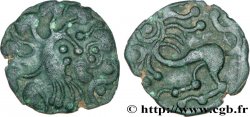
GALLIEN - BELGICA - BELLOVACI (Region die Beauvais) Bronze au lion fVZ
200.00 €

DRITTE FRANZOSISCHE REPUBLIK Médaille, Société de tir du XVIe arrondissement
30.00 €

DRITTE FRANZOSISCHE REPUBLIK Médaille, Union des syndicats de l’alimentation
30.00 €

FUNFTE FRANZOSISCHE REPUBLIK Médaille, Économie, finance et budget, Au nom de
15.00 €

FUNFTE FRANZOSISCHE REPUBLIK Médaille, Bicentenaire de la Révolution, L’êtr
50.00 €

VEREINIGTE STAATEN VON AMERIKA Lot de deux monnaies 1 Dollar Lyndon B. Johnson 2
7.00 €
cgbfr.de numismatik


