


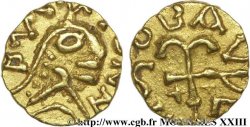
v23_0906 - BALLON (BALAIONNVM) - Sarthe, arrondissement du Mans Triens, monétaire ISOBAUDES

MONNAIES 23 (2004)
Startpreis : 2 200.00 €
Schätzung : 3 500.00 €
Erzielter Preis : 3 600.00 €
Anzahl der Gebote : 5
Höchstgebot : 3 600.00 €
Startpreis : 2 200.00 €
Schätzung : 3 500.00 €
Erzielter Preis : 3 600.00 €
Anzahl der Gebote : 5
Höchstgebot : 3 600.00 €
Type : Triens, monétaire ISOBAUDES
Datum: (VIIe siècle)
Name der Münzstätte / Stadt : BALLON (Sarthe)
Metall : Gold
Durchmesser : 10,5 mm
Stempelstellung : 6 h.
Gewicht : 1,19 g.
Seltenheitsgrad : R3
Kommentare zum Erhaltungszustand:
Exceptionnelle monnaie, bien centrée sur un petit flan. Trace de coin rouillé au droit
N° im Nachschlagewerk :
Pedigree :
Cette monnaie provient de la collection du Vicomte Ponton d’Amécourt ; elle est illustrée dans son ouvrage (1883) sous le n° 49 et est reprise dans le Belfort sous le n° 620. Elle aurait été achetée en avril 1953
Vorderseite
Titulatur der Vorderseite BALAIONN.
Beschreibung Vorderseite Buste au type de l’appendice perlé à droite, légende autour.
Rückseite
Titulatur der Rückseite +ISAVBODE.
Beschreibung Rückseite Croix ancrée accostée de deux croisettes et fichée sur un globe.
Kommentare
Les descriptions donnent la légende BALAIONNO, alors que les dessins et vis-à-vis illustrant la monnaie ne représentent pas le dernier O. Semble être des mêmes coins que l’exemplaire illustrant le Prou, n° 435.
Le style cénoman est bien caractérisé par le profil concave ; l'ourlet de perles est une imitation du chaperon d'Amboise. Le nom de la ville est lu BALATONNO dans le Prou, alors que Belfort et d'Amécourt mettent BALAIONN. C'est incontestablement la ville de Ballon ; selon Ponton d’Amécourt, “l'épigraphie monétaire se conformant à la prononciation vulgaire a devancé les textes manuscrits dans l'altération de la forme ancienne. Les textes ont en effet conservé jusqu'au XIe siècle la dentale que le langage populaire avait altéré dès le VIIe. Les espèces émises avec le nom d'Isobaudes correspondent aux grandes émissions de Vinovaldus au Mans et de Mallebodus à Souillé. Le nom d'Isobaudes ne se trouve pas dans d'autres ateliers. Il paraît être l'association hybride de IESVS ou peut-être HESVS avec le suffixe germain ALT modifié en BALD et BAVD” (cf. Recherche des monnaies mérovingiennes du Cenomanicum, pages 99-101).
The descriptions give the legend BALAIONNO, while the drawings and the opposite illustrating the coin do not represent the last O. Seems to be from the same dies as the example illustrating the Prou, n° 435. The Cenoman style is well characterized by the concave profile; the pearl hem is an imitation of the chaperon of Amboise. The name of the city is read BALATONNO in the Prou, while Belfort and d'Amécourt put BALAIONN. It is incontestably the city of Ballon; According to Ponton d'Amécourt, \\\"monetary epigraphy conforming to the common pronunciation preceded the handwritten texts in the alteration of the ancient form. The texts in fact retained until the 11th century the dentalium that popular language had altered from the 7th. The coins issued with the name Isobaudes correspond to the large issues of Vinovaldus in Le Mans and of Mallebodus in Souillé. The name Isobaudes is not found in other workshops. It appears to be the hybrid association of IESVS or perhaps HESVS with the Germanic suffix ALT modified into BALD and BAVD\\\" (see Research into Merovingian coins from the Cenomanicum, pages 99-101)
Le style cénoman est bien caractérisé par le profil concave ; l'ourlet de perles est une imitation du chaperon d'Amboise. Le nom de la ville est lu BALATONNO dans le Prou, alors que Belfort et d'Amécourt mettent BALAIONN. C'est incontestablement la ville de Ballon ; selon Ponton d’Amécourt, “l'épigraphie monétaire se conformant à la prononciation vulgaire a devancé les textes manuscrits dans l'altération de la forme ancienne. Les textes ont en effet conservé jusqu'au XIe siècle la dentale que le langage populaire avait altéré dès le VIIe. Les espèces émises avec le nom d'Isobaudes correspondent aux grandes émissions de Vinovaldus au Mans et de Mallebodus à Souillé. Le nom d'Isobaudes ne se trouve pas dans d'autres ateliers. Il paraît être l'association hybride de IESVS ou peut-être HESVS avec le suffixe germain ALT modifié en BALD et BAVD” (cf. Recherche des monnaies mérovingiennes du Cenomanicum, pages 99-101).
The descriptions give the legend BALAIONNO, while the drawings and the opposite illustrating the coin do not represent the last O. Seems to be from the same dies as the example illustrating the Prou, n° 435. The Cenoman style is well characterized by the concave profile; the pearl hem is an imitation of the chaperon of Amboise. The name of the city is read BALATONNO in the Prou, while Belfort and d'Amécourt put BALAIONN. It is incontestably the city of Ballon; According to Ponton d'Amécourt, \\\"monetary epigraphy conforming to the common pronunciation preceded the handwritten texts in the alteration of the ancient form. The texts in fact retained until the 11th century the dentalium that popular language had altered from the 7th. The coins issued with the name Isobaudes correspond to the large issues of Vinovaldus in Le Mans and of Mallebodus in Souillé. The name Isobaudes is not found in other workshops. It appears to be the hybrid association of IESVS or perhaps HESVS with the Germanic suffix ALT modified into BALD and BAVD\\\" (see Research into Merovingian coins from the Cenomanicum, pages 99-101)
Historischer Hintergrund
BALLON (BALAIONNVM) - Sarthe, arrondissement du Mans
(7. Jahrhundert)
Die Stadt Ballon liegt derzeit 18 Kilometer nordöstlich von Le Mans, am linken Ufer der Sarthe. Ballon ist eine Ortschaft in Gallien. Die Kirche von Ballon wird von Saint-Julien geweiht. Im Jahr 802 bestätigt Karl der Große der Kirche von Le Mans den Besitz dieses Ortes. Im Jahr 832 erteilte Louis le Débonnaire eine entsprechende Urkunde. Im Jahr 840 gab derselbe Kaiser auf Wunsch des Bischofs Saint-Aldric die Kirche von Le Mans an ihre früheren Besitztümer zurück, insbesondere an Ballon. Die Form seines Namens, wie er auf den Münzen eingraviert ist, ist der Umgangssprache des 7. Jahrhunderts entlehnt, aber die Texte geben eine etwas korrektere Form wieder, wenn auch bereits stark verändert; Balatone, Äquivalent von Baladuno (abgeleitet von dunum, übersetzt als Hügel, Berg)..
 Berichten über einen Fehler
 Die Seite drucken
 Teilen meiner Auswahl
 Stellen Sie eine Frage
 Einlieferung/Verkauf
Ihre zuletzt angesehenen Artikel
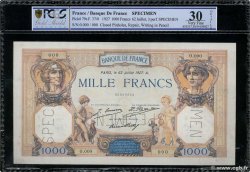
1000 Francs CÉRÈS ET MERCURE Spécimen FRANKREICH 1927 F.37.01Sp fVZ
700.00 €

500 et 1000 Lei Lot MOLDAWIEN 1992 P.17 et P.18 ST
165.00 €

HAINAUT - COMTÉ DE HAINAUT - GUILLAUME Ier Esterlin au losange fVZ
250.00 €
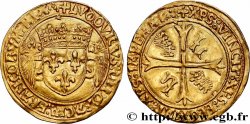
LOUIS XII Écu d'or aux porcs-épics 19/11/1507 Lyon VZ
1850.00 €
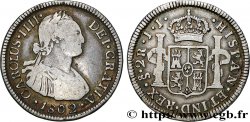
CHILE
2 Reales Charles IV 1802 Santiago du Chili fSS
77.00 €
BALLON (BALAIONNVM) - Sarthe, arrondissement du Mans Triens, monétaire ISOBAUDE
3600.00 €
cgbfr.de numismatik


