


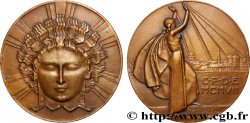
E-auction 351-265007 - fme_371005 - DRITTE FRANZOSISCHE REPUBLIK Médaille de la visite du Tsar en France

Sie müssen angeschlossen sein und von cgb.fr genehmigt werden, um in einer E-Auktion teilzunehmen.Melden Sie sich an, um zu wetten..Die Kontobestätigungen sind innerhalb von 48 Stunden nach Ihrer Anmeldung gemacht.Warten Sie nicht bis die letzten zwei Tage vor dem Abschluss eines Verkaufs, um Ihre Registrierung abzuschließen. Klickend "BIETEN" verpflichten Sie sich vertraglich, diesen Artikel zu kaufen und Sie nehmen ohne Reserve die allgemeinen Verkaufsbedingungen für den e-auctions zu cgb.fr an.
Der Verkauf wird an der Zeit auf der Übersichtsseite angezeigt geschlossen werden. Angebote, die nach der Schließung Zeit empfangen sind, werden nicht gültig.
Bitte beachten Sie, dass die Fristen für die Einreichung Ihres Angebots auf unsere Server können variieren und es kann zur Ablehnung Ihres Angebots entstehen, wenn es in den letzten Sekunden des Verkaufs gesendet wird. Die Angebote sollen mit ganzer Zahl ausgeführt sein, Sie können Kommas oder des Punktes in Ihrem Angebot nicht erfassen. Bei Fragen klicken Sie hier, um einen Blick auf die FAQ E-Auktionen.
KEINE ANSCHAFFUNGSKOSTEN FÜR DIE KÄUFER.
KEINE ANSCHAFFUNGSKOSTEN FÜR DIE KÄUFER.
| Schätzung : | 200 € |
| Preis : | 38 € |
| Höchstgebot : | 51 € |
| Verkaufsende : | 06 Januar 2020 18:26:30 |
| Bieter : | 8 Bieter |
Type : Médaille de la visite du Tsar en France
Datum: 1896
Name der Münzstätte / Stadt : France et Russie
Metall : Aluminium
Durchmesser : 35,5 mm
Stempelstellung : 12 h.
Graveur IMPORTÉ
Gewicht : 5,85 g.
Rand lisse
Punze : sans poinçon
Kommentare zum Erhaltungszustand:
Bel exemplaire présentant néanmoins des traces de frottement et quelques rayures
Vorderseite
Titulatur der Vorderseite FRANCE - RUSSIE // AMITIE.
Beschreibung Vorderseite Félix Faure et Nicolas II Tsar de Russie, dans deux mandorles.
Rückseite
Titulatur der Rückseite VISITE / DU TSAR / EN FRANCE / 1896.
Beschreibung Rückseite Légende en quatre lignes dans une couronne de lauriers. Inscrit à l’exergue : IMPORTE.
Kommentare
En 1896, le jeune empereur Nicolas II et son épouse l'impératrice Alexandra firent un voyage officiel en France qui eut un grand retentissement dans tout le pays. La Russie était la seule alliée de la France, France dont toute l'Europe se méfiait. Le couple visita Compiègne et Paris, assistait à une parade navale à Cherbourg, le 9 octobre, le tsar assistait aux manœuvres militaires au camp de Chalons. À cette occasion Nicolas II posa la première pierre du Pont Alexandre-III, nommé en l'honneur de son père et pour symboliser l'amitié franco-russe. Le pont sera inauguré quatre ans plus tard par le président Émile Loubet, pour l'Exposition universelle de Paris de 1900. L'amiral Henri Rieunier est invité d'honneur lors des cérémonies et sera présent à toutes ces manifestations..
In 1896, the young Emperor Nicholas II and his wife, Empress Alexandra, made an official trip to France that caused a great stir throughout the country. Russia was France's only ally, a France that was distrusted throughout Europe. The couple visited Compiègne and Paris, attended a naval parade in Cherbourg; on October 9, the Tsar witnessed military maneuvers at the Chalons camp. On this occasion, Nicholas II laid the foundation stone of the Pont Alexandre-III, named in honor of his father and to symbolize Franco-Russian friendship. The bridge would be inaugurated four years later by President Émile Loubet for the 1900 Paris World's Fair. Admiral Henri Rieunier was a guest of honor at the ceremonies and would be present at all these events.
In 1896, the young Emperor Nicholas II and his wife, Empress Alexandra, made an official trip to France that caused a great stir throughout the country. Russia was France's only ally, a France that was distrusted throughout Europe. The couple visited Compiègne and Paris, attended a naval parade in Cherbourg; on October 9, the Tsar witnessed military maneuvers at the Chalons camp. On this occasion, Nicholas II laid the foundation stone of the Pont Alexandre-III, named in honor of his father and to symbolize Franco-Russian friendship. The bridge would be inaugurated four years later by President Émile Loubet for the 1900 Paris World's Fair. Admiral Henri Rieunier was a guest of honor at the ceremonies and would be present at all these events.
Historischer Hintergrund
DRITTE FRANZOSISCHE REPUBLIK
(04.09.1870-10.07.1940)
Die Nachricht von der Kapitulation Sedans löst am 4. September 1870 in Paris die Revolution aus. Die im Hôtel de Ville proklamierte Republik verfügt über eine provisorische Regierung namens Regierung der Nationalen Verteidigung. Auf der linken Seite durch den Aufstand der Kommune und auf der rechten Seite durch die Monarchisten bedroht, hatte das neue Regime einen schwierigen Start.. Als ursprünglicher Chef der Exekutive (Februar 1871) war Thiers für die Neuorganisation des Landes verantwortlich, bevor er sich für die Regierungsform entschied.. Er wurde im August 1871 Präsident der Republik und musste trotz seiner Bemühungen zur Befreiung des Territoriums im März 1873 sein Amt angesichts des Widerstands der Royalisten aufgeben.. Er wird dann durch Mac-Mahon ersetzt, der für die Wiederherstellung der Monarchie ist, aber dieser wird nach der Frage der Flagge nicht wiederhergestellt. Im November 1873 wurde dann das Gesetz des Septennats in Kraft gesetzt und 1875 wurden die Grundgesetze verabschiedet, die als Verfassung der Dritten Republik dienten.. Das parlamentarische System zeichnet sich insbesondere durch das klare Übergewicht der gesetzgebenden Gewalt gegenüber der exekutiven Gewalt aus. Antiklerikalistisch macht die Dritte Republik die Schule kostenlos, säkular und obligatorisch, führt aber die Kolonialpolitik für ihre wirtschaftlichen, strategischen und moralischen Ambitionen fort. Die Trennung von Kirche und Staat wurde 1905 beschlossen.. Die Idee der Rache an Deutschland und ein ausgeprägter Nationalismus stehen im Mittelpunkt der Boulang-Krise, des Panama-Skandals oder der Dreyfus-Affäre der Jahre 1886-1899, während die Außenpolitik insbesondere in Marokko sehr aktiv ist und sich das Wettrüsten entwickelt. Der Erste Weltkrieg war für Frankreich teuer, das sich erst ab 1920 oder gar 1928 von der Währung mit dem „Poincaré“-Franc erholte.. Die Krise von 1929 ist erst ab 1932 spürbar, dauert aber bis 1939, einer Zeit, in der die Instabilität der Minister sehr wichtig ist. Die Dritte Republik geriet 1934 ins Wanken und fand mit dem Antifaschismus einen neuen gemeinsamen Kitt, der es der Volksfront 1936 ermöglichte, an die Macht zu gelangen.. Doch das gegenüber Deutschland gelähmte Frankreich geriet anschließend in einen „Scheinkrieg“ und erlitt im Juni 1940 eine der größten Niederlagen seiner Geschichte.. Die am 10. Juli 1940 in der Nationalversammlung in Vichy versammelten Kammern stimmten, obwohl 1936 gewählt, Pétain in einer Art kollektivem Selbstmord mit 569 Ja-Stimmen, 80 Nein-Stimmen und 18 Enthaltungen die volle Macht zu..
 Berichten über einen Fehler
 Die Seite drucken
 Teilen meiner Auswahl
 Stellen Sie eine Frage
 Einlieferung/Verkauf
In Verbindung stehende Artikel

 Details


cgbfr.de numismatik


