


fjt_015740 - POLICE ET GENDARMERIE Antoine de Sartines - Illuminations de Paris 1769

Nicht verfügbar.
Artikel auf unserem Online-Shop verkauft (2012)
Preis : 350.00 €
Artikel auf unserem Online-Shop verkauft (2012)
Preis : 350.00 €
Type : Antoine de Sartines - Illuminations de Paris
Datum: 1769
Metall : Silber
Durchmesser : 31 mm
Stempelstellung : 12 h.
Rand lisse
Seltenheitsgrad : R2
N° im Nachschlagewerk :
Vorderseite
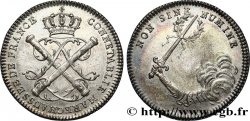
Titulatur der Vorderseite ILLUMON DE PARIS P LES SOINS DE ME DE SARTINE 1769.
Beschreibung Vorderseite Armes de G. de Sartine.
Rückseite
Titulatur der Rückseite ILLO PROCURANTE NOX INSTAR DIEI.
Beschreibung Rückseite Minerve assise, portant le portrait de Sartine.
Übersetzung der Rückseite Sous son administration, la nuit est devenue égale au jour.
Kommentare
Il s’agit d’une médaille plus que d’un jeton mais, classée dans Feuardent et d’un format réduit, elle peut se classer dans une collection de jetons.
A propos des illuminations de Paris, on lit dans les “Mémoires secrets pour servir àl’histoire de la république des lettres” : “Toutes les affaires de ce pays-ci traînent en longueur, surtout quand il s'agit d'innover. Il y a quelque temps qu'on avait annoncé celle de Sr. Bourgeois de Châteaublanc pour l'illumination de Paris durant toute l’année, comme prête à se consommer ; la chose est enfin décidée, et par un arrêt du Conseil, rendu le 30 Juin dernier, il est chargé de l’entreprise de toutes les lanternes pendant vingt ans, conjointement avec deux autres associés. C'est une justice qu'on devait d'autant mieux rendre à ce bon citoyen qu'il est le véritable inventeur des lanternes à réverbère, que toutes celles dont on a fait des essais ne font que des configurations différentes de son modele, auquel on est obligé de revenir. II est reconnu que ses lanternes éclairent parfaitement, avec le plus d'économie possible et par une mécanique simple qui fait infiniment d'honneur aux connaissances et aux talents de cet artiste. Son projet doit s'exécuter dès le 1er Août. Tout Paris applaudit à la constance et au zèle avec lequel M. le Lieutenant Général de Police a discuté la matière, et à l'intégrité qu'il a apportée dans le jugement. Cette amélioration du luminaire de la capitale, fera époque dans l’administration de la Police, et distinguera à l’avenir celle de M. de Sartines.
Antoine Raymond Juan Gualbert Gabriel de Sartine (ou Sartines), comte d’Alby (Barcelone, 12 juillet 1729 – Tarragone, 7 septembre 1801) est un homme politique français, conseiller 1752, lieutenant criminel 1755 au Châtelet à Paris, il est lieutenant général de police (1759–1774), puis ministre de la Marine sous Louis XVI.
La lieutenance générale de police
S'attachant à améliorer les services de la capitale, notamment ceux de l'approvisionnement (il active la construction de la halle au blé), de l'éclairage, il fait établir des lanternes à réverbère ainsi que la sécurité publique, Sartine fait de Paris le modèle des capitales européennes. Il substitue également aux tripots clandestins des maisons de jeu surveillées par ses agents et taxées au profit du fisc.
Excellent administrateur et politique habile, Sartine prend à bras le corps les problèmes d’hygiène, d’approvisionnement et de police en général lors de sa lieutenance. Les papiers à la main lui prêtent des manœuvres occultes, l'accusant d'avoir entretenu un « cabinet noir » et nombres d'ouvrages révolutionnaires devaient lui supposer un réseau d'espionnage dans la capitale. Ainsi, pour Pierre Manuel :
« lorsque le libertin Sartine poursuivait les citoyens jusques sous leurs toits tutélaires qu’il épiait même les secrets honteux de leurs nuits, ce n'était que pour égayer un roi, plus libertin encore, de toutes les nudités du vice ; c'était pour fournir à son maître des exemples et des excuses, comme si son autorité et sa conscience en avaient eu besoin[1] ! ».
Pour plus d’information lire la notice de wikipedia avec portrait http://fr.wikipedia.org/wiki/Antoine_de_Sartine.
This is more of a medal than a token, but, classified in Feuardent and of a reduced format, it can be classified in a collection of tokens..
Regarding the illuminations of Paris, we read in the “Secret Memoirs to Serve the History of the Republic of Letters”: “All affairs in this country drag on, especially when it comes to innovation. Some time ago, Sr.'s was announced.. Bourgeois of Châteaublanc for the illumination of Paris throughout the year, as if ready to be consumed; the thing is finally decided, and by a decree of the Council, rendered on June 30th, he is charged with the undertaking of all the lanterns for twenty years, jointly with two other associates. This is a justice that should be done all the more to this good citizen since he is the true inventor of street lanterns, since all those that have been tested only have different configurations from his model, to which we are obliged to return.. It is recognized that his lanterns illuminate perfectly, with the greatest possible economy and by a simple mechanism which does infinite honor to the knowledge and talents of this artist.. His project must be executed from August 1st. All Paris applauds the constancy and zeal with which M. the Lieutenant General of Police discussed the matter, and the integrity he brought to the judgment. This improvement of the capital's lighting will be an epoch in the administration of the Police, and will distinguish in the future that of M. of Sartines.
Antoine Raymond Juan Gualbert Gabriel de Sartine (or Sartines), Count of Alby (Barcelona, July 12, 1729 – Tarragona, September 7, 1801) was a French politician, councilor 1752, criminal lieutenant 1755 at the Châtelet in Paris, he was lieutenant general of police (1759–1774), then Minister of the Navy under Louis XVI.
The lieutenant general of police Striving to improve the capital's services, particularly those of supply (he activated the construction of the wheat market), lighting, he had street lanterns installed as well as public security, Sartine made Paris the model of European capitals. It also replaces illegal gambling dens with gambling houses monitored by its agents and taxed for the benefit of the tax authorities..
An excellent administrator and skilled politician, Sartine tackled the problems of hygiene, supply and policing in general during his lieutenantship.. The papers in hand attribute to him occult maneuvers, accusing him of having maintained a \\\"black cabinet\\\" and a number of revolutionary works were to suppose that he had a spy network in the capital.. Thus, for Pierre Manuel: \\\"when the libertine Sartine pursued citizens even under their tutelary roofs, spying even on the shameful secrets of their nights, it was only to amuse a king, even more libertine, with all the nakedness of vice; it was to provide his master with examples and excuses, as if his authority and his conscience had needed them[1]!\\\".
For more information, read the Wikipedia entry with portrait http://fr. Wikipedia. org/wiki/Antoine_de_Sartine
A propos des illuminations de Paris, on lit dans les “Mémoires secrets pour servir àl’histoire de la république des lettres” : “Toutes les affaires de ce pays-ci traînent en longueur, surtout quand il s'agit d'innover. Il y a quelque temps qu'on avait annoncé celle de Sr. Bourgeois de Châteaublanc pour l'illumination de Paris durant toute l’année, comme prête à se consommer ; la chose est enfin décidée, et par un arrêt du Conseil, rendu le 30 Juin dernier, il est chargé de l’entreprise de toutes les lanternes pendant vingt ans, conjointement avec deux autres associés. C'est une justice qu'on devait d'autant mieux rendre à ce bon citoyen qu'il est le véritable inventeur des lanternes à réverbère, que toutes celles dont on a fait des essais ne font que des configurations différentes de son modele, auquel on est obligé de revenir. II est reconnu que ses lanternes éclairent parfaitement, avec le plus d'économie possible et par une mécanique simple qui fait infiniment d'honneur aux connaissances et aux talents de cet artiste. Son projet doit s'exécuter dès le 1er Août. Tout Paris applaudit à la constance et au zèle avec lequel M. le Lieutenant Général de Police a discuté la matière, et à l'intégrité qu'il a apportée dans le jugement. Cette amélioration du luminaire de la capitale, fera époque dans l’administration de la Police, et distinguera à l’avenir celle de M. de Sartines.
Antoine Raymond Juan Gualbert Gabriel de Sartine (ou Sartines), comte d’Alby (Barcelone, 12 juillet 1729 – Tarragone, 7 septembre 1801) est un homme politique français, conseiller 1752, lieutenant criminel 1755 au Châtelet à Paris, il est lieutenant général de police (1759–1774), puis ministre de la Marine sous Louis XVI.
La lieutenance générale de police
S'attachant à améliorer les services de la capitale, notamment ceux de l'approvisionnement (il active la construction de la halle au blé), de l'éclairage, il fait établir des lanternes à réverbère ainsi que la sécurité publique, Sartine fait de Paris le modèle des capitales européennes. Il substitue également aux tripots clandestins des maisons de jeu surveillées par ses agents et taxées au profit du fisc.
Excellent administrateur et politique habile, Sartine prend à bras le corps les problèmes d’hygiène, d’approvisionnement et de police en général lors de sa lieutenance. Les papiers à la main lui prêtent des manœuvres occultes, l'accusant d'avoir entretenu un « cabinet noir » et nombres d'ouvrages révolutionnaires devaient lui supposer un réseau d'espionnage dans la capitale. Ainsi, pour Pierre Manuel :
« lorsque le libertin Sartine poursuivait les citoyens jusques sous leurs toits tutélaires qu’il épiait même les secrets honteux de leurs nuits, ce n'était que pour égayer un roi, plus libertin encore, de toutes les nudités du vice ; c'était pour fournir à son maître des exemples et des excuses, comme si son autorité et sa conscience en avaient eu besoin[1] ! ».
Pour plus d’information lire la notice de wikipedia avec portrait http://fr.wikipedia.org/wiki/Antoine_de_Sartine.
This is more of a medal than a token, but, classified in Feuardent and of a reduced format, it can be classified in a collection of tokens..
Regarding the illuminations of Paris, we read in the “Secret Memoirs to Serve the History of the Republic of Letters”: “All affairs in this country drag on, especially when it comes to innovation. Some time ago, Sr.'s was announced.. Bourgeois of Châteaublanc for the illumination of Paris throughout the year, as if ready to be consumed; the thing is finally decided, and by a decree of the Council, rendered on June 30th, he is charged with the undertaking of all the lanterns for twenty years, jointly with two other associates. This is a justice that should be done all the more to this good citizen since he is the true inventor of street lanterns, since all those that have been tested only have different configurations from his model, to which we are obliged to return.. It is recognized that his lanterns illuminate perfectly, with the greatest possible economy and by a simple mechanism which does infinite honor to the knowledge and talents of this artist.. His project must be executed from August 1st. All Paris applauds the constancy and zeal with which M. the Lieutenant General of Police discussed the matter, and the integrity he brought to the judgment. This improvement of the capital's lighting will be an epoch in the administration of the Police, and will distinguish in the future that of M. of Sartines.
Antoine Raymond Juan Gualbert Gabriel de Sartine (or Sartines), Count of Alby (Barcelona, July 12, 1729 – Tarragona, September 7, 1801) was a French politician, councilor 1752, criminal lieutenant 1755 at the Châtelet in Paris, he was lieutenant general of police (1759–1774), then Minister of the Navy under Louis XVI.
The lieutenant general of police Striving to improve the capital's services, particularly those of supply (he activated the construction of the wheat market), lighting, he had street lanterns installed as well as public security, Sartine made Paris the model of European capitals. It also replaces illegal gambling dens with gambling houses monitored by its agents and taxed for the benefit of the tax authorities..
An excellent administrator and skilled politician, Sartine tackled the problems of hygiene, supply and policing in general during his lieutenantship.. The papers in hand attribute to him occult maneuvers, accusing him of having maintained a \\\"black cabinet\\\" and a number of revolutionary works were to suppose that he had a spy network in the capital.. Thus, for Pierre Manuel: \\\"when the libertine Sartine pursued citizens even under their tutelary roofs, spying even on the shameful secrets of their nights, it was only to amuse a king, even more libertine, with all the nakedness of vice; it was to provide his master with examples and excuses, as if his authority and his conscience had needed them[1]!\\\".
For more information, read the Wikipedia entry with portrait http://fr. Wikipedia. org/wiki/Antoine_de_Sartine
Historischer Hintergrund
POLICE ET GENDARMERIE
 Berichten über einen Fehler
 Die Seite drucken
 Teilen meiner Auswahl
 Stellen Sie eine Frage
 Einlieferung/Verkauf
In Verbindung stehende Artikel
 Details



cgbfr.de numismatik


