


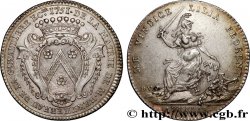
fjt_713683 - ORLÉANAIS - Noblesse et villes Léonor d'Orléans, duc de Longueville n.d.
Nicht verfügbar.
Artikel auf unserem Online-Shop verkauft (2024)
Preis : 140.00 €
Artikel auf unserem Online-Shop verkauft (2024)
Preis : 140.00 €
Type : Léonor d'Orléans, duc de Longueville
Datum: n.d.
Metall : Messing
Durchmesser : 28,5 mm
Stempelstellung : 7 h.
Gewicht : 4,95 g.
Rand lisse
Seltenheitsgrad : R2
N° im Nachschlagewerk :
Pedigree :
Exemplaire provenant de la Collection MARINECHE
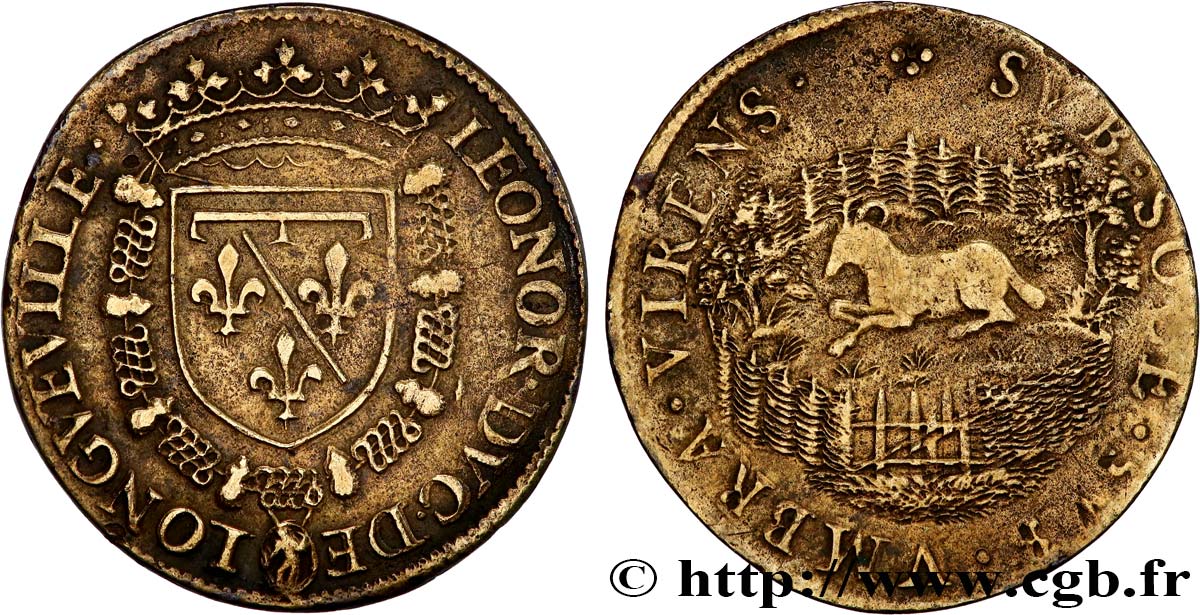
Vorderseite
Titulatur der Vorderseite LEONOR. DUC. DE. LONGUEVILLE.
Beschreibung Vorderseite Armes de Leonor de Longueville avec le collier de l’Ordre de Saint Michel et de Saint Georges.
Rückseite
Titulatur der Rückseite SUB. SOLE. SUB. UMBRA. VIRENS.
Beschreibung Rückseite Une chèvre dans un enclos palissadé.
Übersetzung der Rückseite Sous le soleil ou à l'ombre, elle reste vigoureuse.
Kommentare
Léonor d'Orléans (1540 - à Blois le 7 août 1573), duc de Longueville, prince de Châtellaillon, marquis de Rothelin, comte de Montgommery et de Tancarville, vicomte d'Abberville, de Melun, comte de Neufchâtel et de Valangin, fut gouverneur de Picardie et Normandie, et l’un des chefs militaires des guerres de religion. Fils de François d'Orléans-Longueville (v. 1513 - v. 1548) et de Jacqueline de Rohan-Gyé (v. 1520 - v. 1587), il combattit dans les dernières guerres d'Italie, et fut fait prisonnier par les Impériaux lors de la sanglante bataille de Saint-Quentin (1557). Il obtint de Charles IX le titre de prince du sang. De son union en 1563 avec la duchesse d’Estouteville Marie de Bourbon (1533-1601), il eut
* Henri d'Orléans, duc de Longueville ;
* François III d'Orléans, comte de Saint-Pol ;
* trois filles, dont Antoinette d’Orléans (née à Trie-Château en 1572, morte à Poitiers le 24 avril 1618)
Il mourut à Blois et fut inhumé à Châteaudun.
Voir sa biographie à http://fr.wikipedia.org/wiki/L%C3%A9onor_d%27Orl%C3%A9ans
Notons que Corre décrit le revers avec une licorne, sur notre exemplaire, c’est manifestement une chèvre avec deux cornes parfaitement nettes. Ce jeton a été frappé après que le Duc ait été promu chevalier de l’Ordre de Saint Michel et de Saint Georges.
Léonor d'Orléans (1540 - in Blois on August 7, 1573), Duke of Longueville, Prince of Châtellaillon, Marquis of Rothelin, Count of Montgomery and Tancarville, Viscount of Abberville, of Melun, Count of Neufchâtel and of Valangin, was governor of Picardy and Normandy, and one of the military leaders of the Wars of Religion. Son of François d'Orléans-Longueville (v. 1513 - v. 1548) and Jacqueline de Rohan-Gyé (v. 1520 - v. 1587), he fought in the last Italian wars, and was taken prisoner by the Imperials during the bloody battle of Saint-Quentin (1557). He obtained from Charles IX the title of prince of the blood. From his union in 1563 with the Duchess of Estouteville Marie de Bourbon (1533-1601), he had * Henri d'Orléans, Duke of Longueville; * François III d'Orléans, Count of Saint-Pol; * three daughters, including Antoinette d'Orléans (born in Trie-Château in 1572, died in Poitiers on April 24, 1618) He died in Blois and was buried in Châteaudun.
See his biography at http://fr. Wikipedia. org/wiki/L%C3%A9onor_d%27Orl%C3%A9ans Note that Corre describes the reverse with a unicorn, on our example, it is clearly a goat with two perfectly clear horns. This token was struck after the Duke was promoted to Knight of the Order of St. Michael and St. George
* Henri d'Orléans, duc de Longueville ;
* François III d'Orléans, comte de Saint-Pol ;
* trois filles, dont Antoinette d’Orléans (née à Trie-Château en 1572, morte à Poitiers le 24 avril 1618)
Il mourut à Blois et fut inhumé à Châteaudun.
Voir sa biographie à http://fr.wikipedia.org/wiki/L%C3%A9onor_d%27Orl%C3%A9ans
Notons que Corre décrit le revers avec une licorne, sur notre exemplaire, c’est manifestement une chèvre avec deux cornes parfaitement nettes. Ce jeton a été frappé après que le Duc ait été promu chevalier de l’Ordre de Saint Michel et de Saint Georges.
Léonor d'Orléans (1540 - in Blois on August 7, 1573), Duke of Longueville, Prince of Châtellaillon, Marquis of Rothelin, Count of Montgomery and Tancarville, Viscount of Abberville, of Melun, Count of Neufchâtel and of Valangin, was governor of Picardy and Normandy, and one of the military leaders of the Wars of Religion. Son of François d'Orléans-Longueville (v. 1513 - v. 1548) and Jacqueline de Rohan-Gyé (v. 1520 - v. 1587), he fought in the last Italian wars, and was taken prisoner by the Imperials during the bloody battle of Saint-Quentin (1557). He obtained from Charles IX the title of prince of the blood. From his union in 1563 with the Duchess of Estouteville Marie de Bourbon (1533-1601), he had * Henri d'Orléans, Duke of Longueville; * François III d'Orléans, Count of Saint-Pol; * three daughters, including Antoinette d'Orléans (born in Trie-Château in 1572, died in Poitiers on April 24, 1618) He died in Blois and was buried in Châteaudun.
See his biography at http://fr. Wikipedia. org/wiki/L%C3%A9onor_d%27Orl%C3%A9ans Note that Corre describes the reverse with a unicorn, on our example, it is clearly a goat with two perfectly clear horns. This token was struck after the Duke was promoted to Knight of the Order of St. Michael and St. George
Historischer Hintergrund
ORLÉANAIS - Noblesse et villes
Die auf den Ruinen der gallischen Stadt Cenabum gegründete Stadt trägt den Namen des Kaisers Aurélien, Aurelianum. Die Stadt war ab dem 4. Jahrhundert ein Bistum und im 6. Jahrhundert Hauptstadt eines fränkischen Königreichs. Die Region Orleans bildete unter den Karolingern eine Grafschaft und wurde dann zur territorialen Basis der kapetischen Macht. Seit 1309 mit einer Universität ausgestattet, wurde sie dann von den Engländern belagert, aber im Mai 1429 von Jeanne d'Arc befreit. Die Stadt ging dann mehrmals in die Geschichte ein, während der Religionskriege, der Fronde oder im Jahr 1870, als sie von von der Tann besetzt wurde.
 Berichten über einen Fehler
 Die Seite drucken
 Teilen meiner Auswahl
 Stellen Sie eine Frage
 Einlieferung/Verkauf
In Verbindung stehende Artikel

 Details
Ihre zuletzt angesehenen Artikel
1 Franc MINES DOMANIALES DE LA SARRE FRANKREICH 1919 VF.51.02 fST
340.00 €
10000 Francs GÉNIE FRANÇAIS FRANKREICH 1946 F.50.02 S
115.00 €
50 Francs LUC OLIVIER MERSON type modifié FRANKREICH 1933 F.16.04 fVZ
120.00 €
ÄGYPTEN -PTOLEMÄISCHES KÖNIGREICH ÄGYPTEN - PTOLEMAIOS VI PHILOMETOR Tetrobo
210.00 €
LOUIS XVI Essai de 6 livres de Duvivier en plomb 1791 Paris VZ
780.00 €

LOUIS-GELDBÖRSEN, GELDBÖRSEN Porte-louis, 3 emplacements, Monogrammé, Royaume
40.00 €
cgbfr.de numismatik


