


fjt_049462 - LOUIS XIV LE GRAND ou LE ROI SOLEIL Révocation de l’Edit de Nantes 1685

Nicht verfügbar.
Artikel auf unserem Online-Shop verkauft
Preis : 57.93 €
Artikel auf unserem Online-Shop verkauft
Preis : 57.93 €
Type : Révocation de l’Edit de Nantes
Datum: 1685
Metall : Kupfer
Durchmesser : 41 mm
Rand lisse, poinçon (abeille)
Punze : Abeille (1860 - 1880)
N° im Nachschlagewerk :
Vorderseite
Titulatur der Vorderseite LUDOVICUS MAGNUS REX CHRISTIANISSIMUS.
Beschreibung Vorderseite Buste de Louis XIV à droite, signé DOLLIN. F.
Übersetzung der Vorderseite Louis le Grand, roi très chrétien.
Rückseite
Titulatur der Rückseite EXTINCTA HAERESIS.
Beschreibung Rückseite La Religion debout, tenant une croix et tenant le livre des Evangiles. A ses pieds l’Hérésie, représentée par une figure terrassée. Au fond le portail d’une église ; à l’exergue : EDICTUM OCTOBRIA / M. DC. LXXXV.
Kommentare
L’Édit de Nantes (1598) avait assuré la liberté religieuse aux protestants français. L’acte de Révocation, médité et corrigé maintes fois par le roi, fut signé le 18 octobre. L’Édit de Fontainebleau ordonnait la démolition des temples calvinistes et la cessation des exercices, la fermeture des écoles protestantes, l’exil des ministres qui ne voudraient pas se convertir et la peine de galères pour tout sujet qui sortirait du royaume. Plus de 200 000 Français s’exilèrent, parmi lesquels des magistrats et des savants, des soldats et des artisans qui renonçaient à leur patrie pour ne pas renier leur foi. Beaucoup allaient en Allemagne, tout particulièrement en Prusse, où l’électeur les accueillit à bras ouverts. Les émigrés créèrent à l’étranger des industries où la France avait jusqu’alors la prééminence. Pour la France, c’était une élite qui fut perdue et il en résulta une crise économique et sociale.
The Edict of Nantes (1598) had guaranteed religious freedom to French Protestants. The Act of Revocation, considered and amended many times by the king, was signed on October 18. The Edict of Fontainebleau ordered the demolition of Calvinist churches and the cessation of religious exercises, the closure of Protestant schools, the exile of ministers who refused to convert, and the galley punishment for any subject who left the kingdom. More than 200,000 French people went into exile, including magistrates and scholars, soldiers, and artisans who renounced their homeland so as not to renounce their faith. Many went to Germany, especially Prussia, where the Elector welcomed them with open arms. The émigrés created industries abroad where France had previously held preeminence. For France, it was an elite that was lost and the result was an economic and social crisis.
The Edict of Nantes (1598) had guaranteed religious freedom to French Protestants. The Act of Revocation, considered and amended many times by the king, was signed on October 18. The Edict of Fontainebleau ordered the demolition of Calvinist churches and the cessation of religious exercises, the closure of Protestant schools, the exile of ministers who refused to convert, and the galley punishment for any subject who left the kingdom. More than 200,000 French people went into exile, including magistrates and scholars, soldiers, and artisans who renounced their homeland so as not to renounce their faith. Many went to Germany, especially Prussia, where the Elector welcomed them with open arms. The émigrés created industries abroad where France had previously held preeminence. For France, it was an elite that was lost and the result was an economic and social crisis.
Historischer Hintergrund
LOUIS XIV LE GRAND ou LE ROI SOLEIL
(14.05.1643-01.09.1715)
Die Regierungszeit Ludwigs XIV. ist die längste und ruhmreichste in der Geschichte Frankreichs. Als Sohn von Ludwig XIII. und Anna von Österreich, geboren am 5. September 1638, bestieg der dritte Bourbonenkönig 1643 den Thron und blieb dort dreiundsiebzig Jahre. Er starb am 1. September 1715 im Alter von siebenundsiebzig Jahren.. Zwischen 1643 und 1661, unter der Regentschaft von Anna von Österreich und dem Amt von Kardinal Mazarin, wurde der Absolutismus durch Kampf aufgebaut: interner Kampf gegen die Fronde, externer Kampf gegen Spanien. Die persönliche Herrschaft Ludwigs XIV. begann im Jahr 1661, als der junge König beschloss, „allein zu regieren“.. Die absolute Monarchie erreichte dann ihren Höhepunkt, als der König von einem Team außergewöhnlicher Minister umgeben war: Le Tellier, Louvois, Colbert, Seignelay. Diese wohlhabende Zeit endete in den 1680er Jahren mit den ersten Rückschlägen, der Aufhebung des Edikts von Nantes (1685), dem Ende der großen äußeren Erfolge und dem allmählichen Verschwinden des Gefolges der ersten Jahre (Colbert starb 1683, Le Tellier). 1685, Seignelay 1690, Louvois 1691). Der dritte und letzte Teil der Regierungszeit, zwischen 1685 und 1715, ist schwieriger. Der alternde König findet keine ähnlichen Mitarbeiter. Herrlich, diese Herrschaft war zunächst eine kriegerische Herrschaft. Noch nie hat Frankreich so viele Kriege erlebt: den Dreißigjährigen Krieg, der 1648 mit dem Kaiserreich und erst 1659 mit Spanien abgeschlossen wurde, den Devolutionskrieg (1667-1668), den Hollandkrieg (1672-1678), den Krieg mit Spanien (1684). ), Krieg der Augsburger Liga (1688-1697), Spanischer Erbfolgekrieg (1701-1713). Es erlebte nie mehr Siege und mehr Eroberungen: 1648 erhielt es durch die Westfälischen Verträge das Elsass, 1659 den Frieden der Pyrenäen, des Artois und des Roussillon; 1668 erreichte es durch den Frieden von Aachen Flandern; im Jahr 1678, durch den Vertrag von Nimwegen, Franche-Comté. 1681 annektierte der König Straßburg. Die folgenden Jahrzehnte verliefen weniger glücklich: 1697 (Vertrag von Ryswick) trat Frankreich Luxemburg ab; 1713 und 1714 (Verträge von Utrecht und Rastadt) verließ sie Acadia, ein Vorspiel zum Verlust Amerikas fünfzig Jahre später. Die Regierungszeit Ludwigs XIV. entspricht daher ziemlich genau der Zeit der französischen Vorherrschaft in Europa: Frankreich verdrängte Spanien; Es wird bald von England abgelöst werden, das das Reich der Meere und der Weiten der Neuen Welt innehat. Zum Ruhm des siegreichen und siegreichen Königs gesellt sich der Ruhm des königlichen Verwalters, Gesetzgebers und Beschützers der Künste und Schriften. Ludwig XIV. und seine Minister perfektionierten den Aufbau der Monarchie: Die Gesetzgebung wurde reformiert, der Adel unterworfen, die Provinzen gezähmt, die Häresie gestürzt, Künstler und Schriftsteller stellten sich in den Dienst der königlichen Macht. Lex una sub uno sole: „ein einziges Gesetz unter einer einzigen Sonne“: Alles muss sich um den Sternenmeister drehen. Ganz Europa spürt die Anziehungskraft und das Prestige von Versailles. Die Realität ist zweifellos weniger brillant als dieses schmeichelhafte Programm: Die königliche Verwaltung bleibt zu klein, um das größte und bevölkerungsreichste Königreich Europas wirklich darzustellen; Partikularismen widerstehen; Die Protestanten ziehen ab, um die Feinde Frankreichs zu bereichern. Fakt ist, dass es das Bild des Königs der Herrlichkeit ist, das sich in den Erinnerungen eingeprägt hat, so wie Ludwig XIV. es beschlossen und gewollt hatte.. Darin liegt der wahre Triumph dieses Prinzen: Für Frankreich und Europa, für das folgende Jahrhundert und die kommenden Jahrhunderte, für seine Zeitgenossen wie für die Nachwelt war und bleibt er der König schlechthin.. Münzen und Medaillen, die uns das jupiterhafte Profil des großen Monarchen wiedergeben, sind Teil dieses Willens und dieses Erfolgs.. Ludwig XIV. widmete ihnen besondere Aufmerksamkeit: Das Grand Siècle ist auch ein großes Jahrhundert der Numismatik.
 Berichten über einen Fehler
 Die Seite drucken
 Teilen meiner Auswahl
 Stellen Sie eine Frage
 Einlieferung/Verkauf
In Verbindung stehende Artikel

 Details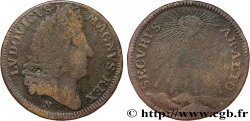


cgbfr.de numismatik


