


Live auction - fme_702781 - LOUIS XIV "THE SUN KING" Médaille, Maximilien Titon (1632-1711), frappe moderne

Sie müssen angeschlossen sein und von cgb.fr genehmigt werden, um in einer E-Auktion teilzunehmen.Melden Sie sich an, um zu wetten..Die Kontobestätigungen sind innerhalb von 48 Stunden nach Ihrer Anmeldung gemacht.Warten Sie nicht bis die letzten zwei Tage vor dem Abschluss eines Verkaufs, um Ihre Registrierung abzuschließen. Klickend "BIETEN" verpflichten Sie sich vertraglich, diesen Artikel zu kaufen und Sie nehmen ohne Reserve die allgemeinen Verkaufsbedingungen für den live auctions zu cgb.fr an.
Der Verkauf wird an der Zeit auf der Übersichtsseite angezeigt geschlossen werden. Angebote, die nach der Schließung Zeit empfangen sind, werden nicht gültig.
Bitte beachten Sie, dass die Fristen für die Einreichung Ihres Angebots auf unsere Server können variieren und es kann zur Ablehnung Ihres Angebots entstehen, wenn es in den letzten Sekunden des Verkaufs gesendet wird. Die Angebote sollen mit ganzer Zahl ausgeführt sein, Sie können Kommas oder des Punktes in Ihrem Angebot nicht erfassen. Bei Fragen klicken Sie hier, um einen Blick auf die FAQ Live-Auktionen.
Alle Gewinngebote unterliegen einem Aufschlag von 18 % für Verkaufskosten.
Alle Gewinngebote unterliegen einem Aufschlag von 18 % für Verkaufskosten.
| Schätzung : | 150 € |
| Preis : | Kein Gebot |
| Höchstgebot : | Kein Gebot |
| Verkaufsende : | 25 August 2026 18:19:33 |
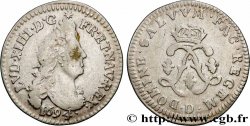
Type : Médaille, Maximilien Titon (1632-1711), frappe moderne
Datum: (1705)
Metall : Bronze
Durchmesser : 55,5 mm
Stempelstellung : 12 h.
Graveur ROUSSEL Jérôme (1663-1713)
Gewicht : 72,35 g.
Rand lisse
Punze : sans poinçon
Kommentare zum Erhaltungszustand:
Joli exemplaire à la patine marron présentant une petite usure sur certains hauts reliefs. Présence de quelques rayures dans les champs
Vorderseite
Titulatur der Vorderseite MAXIMILIANUS TITON - ARMIS CUDENIS PRAEF..
Beschreibung Vorderseite Buste de Maximilien Titon à droite, signé : H. ROUSSEL F..
Rückseite
Titulatur der Rückseite IOVIS PARAT - ARMA TRIUMPHIS // À L’EXERGUE : M.DCC. V..
Beschreibung Rückseite Trophée d’armes entre deux divinités guerrières à l’antique.
Kommentare
Exemplaire sans poinçon, correspondant probablement à une frappe du début du XIXe siècle.
Maximilien Titon (1632-1711), est un financier et magistrat français. Seigneur d’Ognon, des Baronnies de Berre, Istres, Lançon et d’Eville, directeur général des manufactures et magasins royaux d'armes sous Louis XIV, secrétaire du Roi et de ses finances, conseiller au Parlement de Paris.
Il était le fils de Claude Titon (mort le 2 octobre 1638), maître brodeur et chef de fourrière de la Maison de la Reine, et de Geneviève Lemercier (veuve de Jean Michel). Débutant comme petit armurier à Paris, mais ayant fait de mauvaises affaires, il émigre en Provence. En 1664, il fait parvenir à Louis XIV un mémoire proposant l’organisation centralisée de la fabrication des armes portatives. En effet, la France continuait alors à acheter ses armes à l’étranger, notamment à Liège, à Utrecht ou Maastricht malgré la création de fonderies et arsenaux nationaux comme Charleville, ou Saint-Étienne. De nombreux petits ateliers indépendants travaillaient également pour la couronne, sous le contrôle d’ingénieurs. Afin de régulariser la production et d'assurer le stockage des armes, le roi fait alors de Titon, qui est très lié aux Le Tellier, un entrepreneur général.
Titon fait fabriquer les armes, gère les dépôts de Paris (à l’Arsenal), de Lille, Metz et Lyon qui fournissent aux capitaines les armes dont les compagnies ont besoin, suivant le tarif fixé par le ministre. Il se fait aider par deux commis : l’armurier Carrier à Saint-Étienne et le riche négociant Toussaint Fournier à la manufacture d'armes de Charleville. Disposant également d’un réseau de commissaires, Titon, peut mener à bien le passage du mousquet au fusil, dont 600 000 exemplaires sont fabriqués en 20 ans, ce qui représente un véritable tour de force, eu égard aux procédés de fabrication de l’époque. D’ailleurs, Titon ne bénéficie pas d’un véritable monopole : les capitaines peuvent s’adresser sur place à des particuliers travaillant à Besançon, à Dunkerque, à Perpignan, à Sedan. Ses commis reçoivent les commandes, sous-traitent avec les artisans locaux puis expédient les armes à Paris pour une seconde épreuve de vérification. Les armuriers recrutent des apprentis plus nombreux, et bientôt s’engagent à ne plus travailler que pour les commis de Titon. Pour suppléer au manque de main-d’œuvre de valeur, ils doivent faire venir de Liège des ouvriers spécialisés. Titon entreprend alors de faire bâtir une fabrique d’armes, à laquelle il fournit le combustible et le fer, importé du Luxembourg et de la Bourgogne, en réalisant un gros bénéfice estimé à 35 %. Vers 1690, c’est un véritable village industriel, Nouzon, qui est élevé près de Charleville. Toutefois, au cours de la guerre de Succession d’Espagne, Titon connaît de graves difficultés financières. Il fait faillite mais n’en continuera pas moins à fournir à l’armée des armes individuelles, et son petit-fils, Louis Maximilien Titon de Villegenon, continuera son œuvre, mais avec moins de succès.
Titon fut l'initiateur du musée militaire des Invalides.
Anobli dès 1672, Titon est très tôt à la tête d’une grosse fortune qui lui permet de se porter acquéreur de la principauté de Martigues et la baronnie de Berre mais surtout de se confectionner une belle collection de peintures entreposée dans sa demeure construite en 1673, rue de Montreuil à Paris : la fameuse « Folie Titon » . La décoration de ce magnifique hôtel, connu également sous le nom de « Titonville », fut réalisée par Charles de La Fosse, Jean Jouvenet, Jean-Baptiste Blain de Fontenay et Charles Poërson. Dans la galerie principale, des scènes de batailles étaient présentées avec des bustes et deux globes du vénitien Vicento Maria Coronelli. Si Titon aimait la sculpture ancienne et possédait une réplique du Laocoon, sa collection était néanmoins dominée par la peinture2. On y trouvait l’Adoration des mages de Nicolas Colombel (1704, New Orléans, museum of arts) et Le portement de croix de Bon Boullogne (anciennement dans la Galerie Heim à Londres). Il est donc tout naturel qu’il se soit adressé au jeune Rigaud, peut-être même conseillé dans ce choix par Le Brun. Quant aux liens entre Titon et Pierre Drevet, ils sont attestés par la signature du modèle au contrat de mariage du graveur en 1696.
Unmarked example, probably corresponding to a strike from the beginning of the 19th century.
Maximilien Titon (1632-1711), was a French financier and magistrate. Lord of Ognon, of the Baronies of Berre, Istres, Lançon and Eville, general director of the royal arms factories and stores under Louis XIV, secretary to the King and his finances, advisor to the Parliament of Paris.
He was the son of Claude Titon (died October 2, 1638), master embroiderer and head of the pound of the Maison de la Reine, and of Geneviève Lemercier (widow of Jean Michel). Starting out as a small gunsmith in Paris, but having done bad business, he emigrated to Provence. In 1664, he sent Louis XIV a memorandum proposing the centralized organization of the manufacture of portable weapons.. Indeed, France continued to buy its weapons abroad, notably in Liège, Utrecht and Maastricht despite the creation of national foundries and arsenals such as Charleville and Saint-Étienne.. Many small independent workshops also worked for the crown, under the control of engineers. In order to regulate production and ensure the storage of weapons, the king then made Titon, who was closely linked to the Le Telliers, a general contractor..
Titon had the weapons manufactured, managed the depots in Paris (at the Arsenal), Lille, Metz and Lyon which supplied the captains with the weapons the companies needed, according to the tariff set by the minister. He was helped by two clerks: the gunsmith Carrier in Saint-Étienne and the wealthy merchant Toussaint Fournier at the arms factory in Charleville.. Also having a network of commissioners, Titon was able to successfully complete the transition from musket to rifle, of which 600,000 were manufactured in 20 years, which represented a real feat of force, given the manufacturing processes of the time.. Moreover, Titon does not benefit from a real monopoly: captains can contact individuals working in Besançon, Dunkirk, Perpignan, Sedan.. His clerks receive the orders, subcontract with local craftsmen and then ship the weapons to Paris for a second verification test.. The gunsmiths recruited more apprentices, and soon committed to working only for Titon's clerks.. To compensate for the lack of skilled labor, they had to bring in specialized workers from Liège.. Titon then undertook to build an arms factory, to which he supplied fuel and iron, imported from Luxembourg and Burgundy, making a large profit estimated at 35%.. Around 1690, a real industrial village, Nouzon, was built near Charleville.. However, during the War of the Spanish Succession, Titon experienced serious financial difficulties.. He went bankrupt but continued to supply the army with individual weapons, and his grandson, Louis Maximilien Titon de Villegenon, continued his work, but with less success..
Titon was the initiator of the military museum of Les Invalides.
Ennobled in 1672, Titon was very early at the head of a large fortune which allowed him to acquire the principality of Martigues and the barony of Berre but above all to build up a fine collection of paintings stored in his residence built in 1673, rue de Montreuil in Paris: the famous \\\"Folie Titon\\\" . The decoration of this magnificent hotel, also known as \\\"Titonville\\\", was carried out by Charles de La Fosse, Jean Jouvenet, Jean-Baptiste Blain de Fontenay and Charles Poërson. In the main gallery, battle scenes were presented with busts and two globes by the Venetian Vicento Maria Coronelli. Although Titon loved ancient sculpture and owned a replica of the Laocoön, his collection was nevertheless dominated by paintings.. It included The Adoration of the Magi by Nicolas Colombel (1704, New Orleans, Museum of Arts) and The Carrying of the Cross by Bon Boullogne (formerly in the Heim Gallery in London). It is therefore quite natural that he turned to the young Rigaud, perhaps even advised in this choice by Le Brun. As for the links between Titon and Pierre Drevet, they are attested by the signature of the model on the engraver's marriage contract in 1696
Maximilien Titon (1632-1711), est un financier et magistrat français. Seigneur d’Ognon, des Baronnies de Berre, Istres, Lançon et d’Eville, directeur général des manufactures et magasins royaux d'armes sous Louis XIV, secrétaire du Roi et de ses finances, conseiller au Parlement de Paris.
Il était le fils de Claude Titon (mort le 2 octobre 1638), maître brodeur et chef de fourrière de la Maison de la Reine, et de Geneviève Lemercier (veuve de Jean Michel). Débutant comme petit armurier à Paris, mais ayant fait de mauvaises affaires, il émigre en Provence. En 1664, il fait parvenir à Louis XIV un mémoire proposant l’organisation centralisée de la fabrication des armes portatives. En effet, la France continuait alors à acheter ses armes à l’étranger, notamment à Liège, à Utrecht ou Maastricht malgré la création de fonderies et arsenaux nationaux comme Charleville, ou Saint-Étienne. De nombreux petits ateliers indépendants travaillaient également pour la couronne, sous le contrôle d’ingénieurs. Afin de régulariser la production et d'assurer le stockage des armes, le roi fait alors de Titon, qui est très lié aux Le Tellier, un entrepreneur général.
Titon fait fabriquer les armes, gère les dépôts de Paris (à l’Arsenal), de Lille, Metz et Lyon qui fournissent aux capitaines les armes dont les compagnies ont besoin, suivant le tarif fixé par le ministre. Il se fait aider par deux commis : l’armurier Carrier à Saint-Étienne et le riche négociant Toussaint Fournier à la manufacture d'armes de Charleville. Disposant également d’un réseau de commissaires, Titon, peut mener à bien le passage du mousquet au fusil, dont 600 000 exemplaires sont fabriqués en 20 ans, ce qui représente un véritable tour de force, eu égard aux procédés de fabrication de l’époque. D’ailleurs, Titon ne bénéficie pas d’un véritable monopole : les capitaines peuvent s’adresser sur place à des particuliers travaillant à Besançon, à Dunkerque, à Perpignan, à Sedan. Ses commis reçoivent les commandes, sous-traitent avec les artisans locaux puis expédient les armes à Paris pour une seconde épreuve de vérification. Les armuriers recrutent des apprentis plus nombreux, et bientôt s’engagent à ne plus travailler que pour les commis de Titon. Pour suppléer au manque de main-d’œuvre de valeur, ils doivent faire venir de Liège des ouvriers spécialisés. Titon entreprend alors de faire bâtir une fabrique d’armes, à laquelle il fournit le combustible et le fer, importé du Luxembourg et de la Bourgogne, en réalisant un gros bénéfice estimé à 35 %. Vers 1690, c’est un véritable village industriel, Nouzon, qui est élevé près de Charleville. Toutefois, au cours de la guerre de Succession d’Espagne, Titon connaît de graves difficultés financières. Il fait faillite mais n’en continuera pas moins à fournir à l’armée des armes individuelles, et son petit-fils, Louis Maximilien Titon de Villegenon, continuera son œuvre, mais avec moins de succès.
Titon fut l'initiateur du musée militaire des Invalides.
Anobli dès 1672, Titon est très tôt à la tête d’une grosse fortune qui lui permet de se porter acquéreur de la principauté de Martigues et la baronnie de Berre mais surtout de se confectionner une belle collection de peintures entreposée dans sa demeure construite en 1673, rue de Montreuil à Paris : la fameuse « Folie Titon » . La décoration de ce magnifique hôtel, connu également sous le nom de « Titonville », fut réalisée par Charles de La Fosse, Jean Jouvenet, Jean-Baptiste Blain de Fontenay et Charles Poërson. Dans la galerie principale, des scènes de batailles étaient présentées avec des bustes et deux globes du vénitien Vicento Maria Coronelli. Si Titon aimait la sculpture ancienne et possédait une réplique du Laocoon, sa collection était néanmoins dominée par la peinture2. On y trouvait l’Adoration des mages de Nicolas Colombel (1704, New Orléans, museum of arts) et Le portement de croix de Bon Boullogne (anciennement dans la Galerie Heim à Londres). Il est donc tout naturel qu’il se soit adressé au jeune Rigaud, peut-être même conseillé dans ce choix par Le Brun. Quant aux liens entre Titon et Pierre Drevet, ils sont attestés par la signature du modèle au contrat de mariage du graveur en 1696.
Unmarked example, probably corresponding to a strike from the beginning of the 19th century.
Maximilien Titon (1632-1711), was a French financier and magistrate. Lord of Ognon, of the Baronies of Berre, Istres, Lançon and Eville, general director of the royal arms factories and stores under Louis XIV, secretary to the King and his finances, advisor to the Parliament of Paris.
He was the son of Claude Titon (died October 2, 1638), master embroiderer and head of the pound of the Maison de la Reine, and of Geneviève Lemercier (widow of Jean Michel). Starting out as a small gunsmith in Paris, but having done bad business, he emigrated to Provence. In 1664, he sent Louis XIV a memorandum proposing the centralized organization of the manufacture of portable weapons.. Indeed, France continued to buy its weapons abroad, notably in Liège, Utrecht and Maastricht despite the creation of national foundries and arsenals such as Charleville and Saint-Étienne.. Many small independent workshops also worked for the crown, under the control of engineers. In order to regulate production and ensure the storage of weapons, the king then made Titon, who was closely linked to the Le Telliers, a general contractor..
Titon had the weapons manufactured, managed the depots in Paris (at the Arsenal), Lille, Metz and Lyon which supplied the captains with the weapons the companies needed, according to the tariff set by the minister. He was helped by two clerks: the gunsmith Carrier in Saint-Étienne and the wealthy merchant Toussaint Fournier at the arms factory in Charleville.. Also having a network of commissioners, Titon was able to successfully complete the transition from musket to rifle, of which 600,000 were manufactured in 20 years, which represented a real feat of force, given the manufacturing processes of the time.. Moreover, Titon does not benefit from a real monopoly: captains can contact individuals working in Besançon, Dunkirk, Perpignan, Sedan.. His clerks receive the orders, subcontract with local craftsmen and then ship the weapons to Paris for a second verification test.. The gunsmiths recruited more apprentices, and soon committed to working only for Titon's clerks.. To compensate for the lack of skilled labor, they had to bring in specialized workers from Liège.. Titon then undertook to build an arms factory, to which he supplied fuel and iron, imported from Luxembourg and Burgundy, making a large profit estimated at 35%.. Around 1690, a real industrial village, Nouzon, was built near Charleville.. However, during the War of the Spanish Succession, Titon experienced serious financial difficulties.. He went bankrupt but continued to supply the army with individual weapons, and his grandson, Louis Maximilien Titon de Villegenon, continued his work, but with less success..
Titon was the initiator of the military museum of Les Invalides.
Ennobled in 1672, Titon was very early at the head of a large fortune which allowed him to acquire the principality of Martigues and the barony of Berre but above all to build up a fine collection of paintings stored in his residence built in 1673, rue de Montreuil in Paris: the famous \\\"Folie Titon\\\" . The decoration of this magnificent hotel, also known as \\\"Titonville\\\", was carried out by Charles de La Fosse, Jean Jouvenet, Jean-Baptiste Blain de Fontenay and Charles Poërson. In the main gallery, battle scenes were presented with busts and two globes by the Venetian Vicento Maria Coronelli. Although Titon loved ancient sculpture and owned a replica of the Laocoön, his collection was nevertheless dominated by paintings.. It included The Adoration of the Magi by Nicolas Colombel (1704, New Orleans, Museum of Arts) and The Carrying of the Cross by Bon Boullogne (formerly in the Heim Gallery in London). It is therefore quite natural that he turned to the young Rigaud, perhaps even advised in this choice by Le Brun. As for the links between Titon and Pierre Drevet, they are attested by the signature of the model on the engraver's marriage contract in 1696
Historischer Hintergrund
LOUIS XIV "THE SUN KING"
(14.05.1643-01.09.1715)
Die Regierungszeit Ludwigs XIV. ist die längste und ruhmreichste in der Geschichte Frankreichs. Als Sohn von Ludwig XIII. und Anna von Österreich, geboren am 5. September 1638, bestieg der dritte Bourbonenkönig 1643 den Thron und blieb dort dreiundsiebzig Jahre lang. Er starb am 1. September 1715 im Alter von siebenundsiebzig Jahren.. Zwischen 1643 und 1661, unter der Regentschaft von Anna von Österreich und dem Amt von Kardinal Mazarin, wurde der Absolutismus durch Kampf aufgebaut: innerer Kampf gegen die Fronde, äußerer Kampf gegen Spanien. Die persönliche Herrschaft Ludwigs XIV. begann im Jahr 1661, als der junge König beschloss, „allein zu regieren“.. Die absolute Monarchie erreichte dann ihren Höhepunkt, als der König von einem Team außergewöhnlicher Minister umgeben war: Le Tellier, Louvois, Colbert, Seignelay. Diese Blütezeit endete in den 1680er Jahren mit den ersten Rückschlägen, der Aufhebung des Edikts von Nantes (1685), dem Ende der großen äußeren Erfolge und dem allmählichen Verschwinden des Gefolges der ersten Jahre (Colbert starb 1683, Le Tellier). 1685, Seignelay 1690, Louvois 1691). Der dritte und letzte Teil der Regierungszeit, zwischen 1685 und 1715, ist schwieriger. Der alternde König findet keine solchen Kollaborateure. Herrlich, diese Herrschaft war zunächst eine kriegerische Herrschaft. Noch nie hat Frankreich so viele Kriege erlebt: den Dreißigjährigen Krieg, der 1648 mit dem Kaiserreich und erst 1659 mit Spanien abgeschlossen wurde, den Devolutionskrieg (1667-1668), den Hollandkrieg (1672-1678), den Krieg mit Spanien (1684). ), Krieg der Augsburger Liga (1688-1697), Spanischer Erbfolgekrieg (1701-1713). Es erlebte nie mehr Siege und mehr Eroberungen: 1648 erhielt es durch die Westfälischen Verträge das Elsass, 1659 den Frieden der Pyrenäen, des Artois und des Roussillon; 1668 erreichte es durch den Frieden von Aachen Flandern; im Jahr 1678, durch den Vertrag von Nimwegen, Franche-Comté. 1681 annektierte der König Straßburg. Die folgenden Jahrzehnte verliefen weniger glücklich: 1697 (Vertrag von Ryswick) trat Frankreich Luxemburg ab; 1713 und 1714 (Verträge von Utrecht und Rastadt) verließ sie Acadia, ein Vorspiel zum Verlust Amerikas fünfzig Jahre später. Die Regierungszeit Ludwigs XIV. entspricht daher ziemlich genau der Zeit der französischen Vorherrschaft in Europa: Frankreich verdrängte Spanien; Es wird bald von England abgelöst werden, das das Reich der Meere und der Weiten der Neuen Welt innehat. Zum Ruhm des siegreichen und siegreichen Königs gesellt sich der Ruhm des königlichen Verwalters, Gesetzgebers und Beschützers der Künste und Schriften. Ludwig XIV. und seine Minister perfektionierten den Aufbau der Monarchie: Die Gesetzgebung wurde reformiert, der Adel unterworfen, die Provinzen gezähmt, die Häresie gestürzt, Künstler und Schriftsteller stellten sich in den Dienst der königlichen Macht. Lex una sub uno sole: „ein einziges Gesetz unter einer einzigen Sonne“: Alles muss sich um den Sternenmeister drehen. Ganz Europa spürt die Anziehungskraft und das Prestige von Versailles. Die Realität ist zweifellos weniger brillant als dieses schmeichelhafte Programm: Die königliche Verwaltung bleibt zu klein, um das größte und bevölkerungsreichste Königreich Europas wirklich darzustellen; Partikularismen widerstehen; Die Protestanten ziehen ab, um die Feinde Frankreichs zu bereichern. Fakt ist, dass es das Bild des Königs der Herrlichkeit ist, das sich in den Erinnerungen eingeprägt hat, so wie Ludwig XIV. es beschlossen und gewollt hatte.. Darin liegt der wahre Triumph dieses Prinzen: Für Frankreich und Europa, für das folgende Jahrhundert und die kommenden Jahrhunderte, für seine Zeitgenossen wie für die Nachwelt war und bleibt er der König schlechthin.. Münzen und Medaillen, die uns das jupiterhafte Profil des großen Monarchen wiedergeben, sind Teil dieses Willens und dieses Erfolgs.. Ludwig XIV. widmete ihnen besondere Aufmerksamkeit: Das Grand Siècle ist auch ein großes Jahrhundert der Numismatik.
 Berichten über einen Fehler
 Die Seite drucken
 Teilen meiner Auswahl
 Stellen Sie eine Frage
 Einlieferung/Verkauf
In Verbindung stehende Artikel

 Details


cgbfr.de numismatik


