


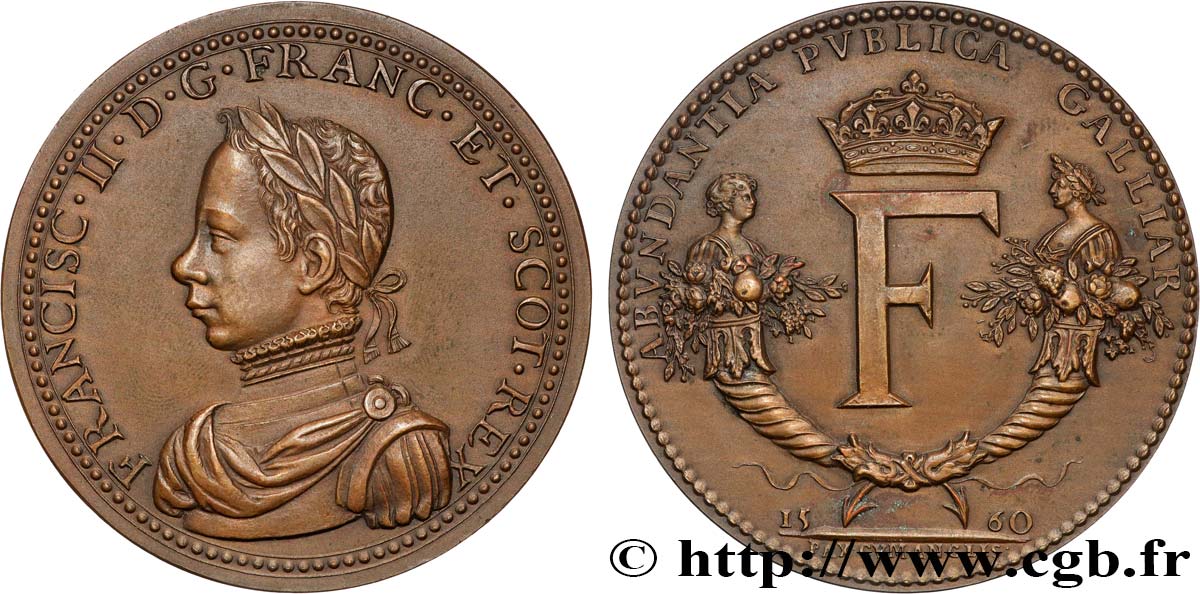
E-auction 649-663079 - fme_879854 - FRANÇOIS II Médaille, Traité d’Édimbourg, refrappe
Sie müssen angeschlossen sein und von cgb.fr genehmigt werden, um in einer E-Auktion teilzunehmen.Melden Sie sich an, um zu wetten..Die Kontobestätigungen sind innerhalb von 48 Stunden nach Ihrer Anmeldung gemacht.Warten Sie nicht bis die letzten zwei Tage vor dem Abschluss eines Verkaufs, um Ihre Registrierung abzuschließen. Klickend "BIETEN" verpflichten Sie sich vertraglich, diesen Artikel zu kaufen und Sie nehmen ohne Reserve die allgemeinen Verkaufsbedingungen für den e-auctions zu cgb.fr an.
Der Verkauf wird an der Zeit auf der Übersichtsseite angezeigt geschlossen werden. Angebote, die nach der Schließung Zeit empfangen sind, werden nicht gültig.
Bitte beachten Sie, dass die Fristen für die Einreichung Ihres Angebots auf unsere Server können variieren und es kann zur Ablehnung Ihres Angebots entstehen, wenn es in den letzten Sekunden des Verkaufs gesendet wird. Die Angebote sollen mit ganzer Zahl ausgeführt sein, Sie können Kommas oder des Punktes in Ihrem Angebot nicht erfassen. Bei Fragen klicken Sie hier, um einen Blick auf die FAQ E-Auktionen.
KEINE ANSCHAFFUNGSKOSTEN FÜR DIE KÄUFER.
KEINE ANSCHAFFUNGSKOSTEN FÜR DIE KÄUFER.
| Schätzung : | 65 € |
| Preis : | 17 € |
| Höchstgebot : | 20 € |
| Verkaufsende : | 22 September 2025 21:00:20 |
| Bieter : | 5 Bieter |
Type : Médaille, Traité d’Édimbourg, refrappe
Datum: (1560)
Name der Münzstätte / Stadt : Monnaie de Paris
Metall : Bronze
Durchmesser : 53,5 mm
Stempelstellung : 12 h.
Gewicht : 69,05 g.
Rand lisse + corne BRONZE
Punze : corne BRONZE
Kommentare zum Erhaltungszustand:
Patine marron hétérogène, présentant des taches noires d’oxydation. Présence de quelques rayures. Traces de manipulation
Vorderseite
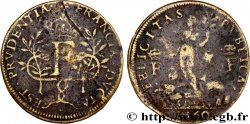
Titulatur der Vorderseite FRANCISC. II. D. G. FRANC. ET. SCOT. REX.
Beschreibung Vorderseite Buste laurée de François II à gauche.
Rückseite
Titulatur der Rückseite ABVNDANTIA PVBLICA GALLIAR // 15 - 60 // À L’EXERGUE : PAX. CVM. ANCLIS.
Beschreibung Rückseite F couronné entre deux corne d’abondances personnifiées.
Kommentare
Le traité d'Édimbourg met fin en partie à la Vieille alliance (The Auld Alliance) entre l'Écosse, la Norvège et la France.
Cette alliance avait été renforcée au XVIe siècle par des mariages entre la couronne d'Écosse et celle de France. Mais le parlement écossais, très favorable au protestantisme, avait décidé de mettre fin à la guerre avec l'Angleterre, de reconnaître Élisabeth Ire pour reine d'Angleterre et d'instaurer la nouvelle religion comme culte officiel. La France renonçait, en signant le Traité d'Édimbourg, à tous ses droits sur l'Écosse, ses droits lui venaient par la reine d'Écosse Marie Stuart, épouse de François II de France et fille de Marie de Guise et du roi Jacques V d'Écosse. La mort de François II le 4 décembre 1560 laissait Marie Stuart veuve à 19 ans. Elle passe un accord avec son demi-frère James (fils naturel de Jacques V) le 15 août 1561 qui lui permet de rentrer en Écosse en souveraine à condition de ne pas chercher à rétablir le catholicisme en tant que religion d'État. Ce retour de Marie Stuart sur le trône d'Écosse sera de courte durée puisqu'en 1567, elle sera forcée d'abdiquer au profit de son fils Jacques VI et Ier.
Ainsi se terminait la Vieille alliance entre la France et l'Écosse, même si certaines clauses perdurèrent jusqu'en 1903.
The Treaty of Edinburgh partially ends the Old Alliance (The Auld Alliance) between Scotland, Norway and France.
This alliance was reinforced in the 16th century by marriages between the crown of Scotland and that of France.. But the Scottish Parliament, very favorable to Protestantism, had decided to end the war with England, to recognize Elizabeth I as Queen of England and to establish the new religion as the official cult.. By signing the Treaty of Edinburgh, France renounced all its rights over Scotland, rights which came to it through the Queen of Scotland, Mary Stuart, wife of Francis II of France and daughter of Mary of Guise and King James V of Scotland.. The death of Francis II on December 4, 1560 left Mary Stuart a widow at the age of 19.. She made an agreement with her half-brother James (the natural son of James V) on 15 August 1561 which allowed her to return to Scotland as sovereign on condition that she did not seek to re-establish Catholicism as the state religion.. This return of Mary Stuart to the throne of Scotland would be short-lived since in 1567, she would be forced to abdicate in favor of her son James VI and I..
Thus ended the Old Alliance between France and Scotland, although some clauses lasted until 1903.
Cette alliance avait été renforcée au XVIe siècle par des mariages entre la couronne d'Écosse et celle de France. Mais le parlement écossais, très favorable au protestantisme, avait décidé de mettre fin à la guerre avec l'Angleterre, de reconnaître Élisabeth Ire pour reine d'Angleterre et d'instaurer la nouvelle religion comme culte officiel. La France renonçait, en signant le Traité d'Édimbourg, à tous ses droits sur l'Écosse, ses droits lui venaient par la reine d'Écosse Marie Stuart, épouse de François II de France et fille de Marie de Guise et du roi Jacques V d'Écosse. La mort de François II le 4 décembre 1560 laissait Marie Stuart veuve à 19 ans. Elle passe un accord avec son demi-frère James (fils naturel de Jacques V) le 15 août 1561 qui lui permet de rentrer en Écosse en souveraine à condition de ne pas chercher à rétablir le catholicisme en tant que religion d'État. Ce retour de Marie Stuart sur le trône d'Écosse sera de courte durée puisqu'en 1567, elle sera forcée d'abdiquer au profit de son fils Jacques VI et Ier.
Ainsi se terminait la Vieille alliance entre la France et l'Écosse, même si certaines clauses perdurèrent jusqu'en 1903.
The Treaty of Edinburgh partially ends the Old Alliance (The Auld Alliance) between Scotland, Norway and France.
This alliance was reinforced in the 16th century by marriages between the crown of Scotland and that of France.. But the Scottish Parliament, very favorable to Protestantism, had decided to end the war with England, to recognize Elizabeth I as Queen of England and to establish the new religion as the official cult.. By signing the Treaty of Edinburgh, France renounced all its rights over Scotland, rights which came to it through the Queen of Scotland, Mary Stuart, wife of Francis II of France and daughter of Mary of Guise and King James V of Scotland.. The death of Francis II on December 4, 1560 left Mary Stuart a widow at the age of 19.. She made an agreement with her half-brother James (the natural son of James V) on 15 August 1561 which allowed her to return to Scotland as sovereign on condition that she did not seek to re-establish Catholicism as the state religion.. This return of Mary Stuart to the throne of Scotland would be short-lived since in 1567, she would be forced to abdicate in favor of her son James VI and I..
Thus ended the Old Alliance between France and Scotland, although some clauses lasted until 1903.
Historischer Hintergrund
FRANÇOIS II
(19.01.1544-05.12.1560)
François II. ist der älteste Sohn von Heinrich II. und Katharina von Médicis. Er heiratete 1558 Maria Stuart, Königin von Schottland, und wurde 1559 nach dem Unfalltod seines Vaters König. Er übergab seine ganze Macht an die lothringischen Onkel seiner Frau, François, Herzog von Guise und Charles, Herzog von Lothringen. Dies provozierte den Widerstand der protestantischen Führer Antoine de Bourbon, des Prince de Condé und der Colignys und führte zur Verschwörung von Amboise, in deren Rahmen sie den König entführen wollten. Der König starb 1560 und hinterließ keine Nachkommen.
 Berichten über einen Fehler
 Die Seite drucken
 Teilen meiner Auswahl
 Stellen Sie eine Frage
 Einlieferung/Verkauf
In Verbindung stehende Artikel

 Details

Ihre zuletzt angesehenen Artikel
10 centimes Lindauer 1928 F.138/15 S20
3.00 €

1 centime Épi 1974 Pessac F.106/25 ST
8.00 €

5 francs Hercule 1877 Paris F.334/19 SS52
27.00 €

25 centimes Patey, 1er type 1903 F.168/3 S35
3.00 €

AMOUR ET MARIAGE Médaille, Mariage chrétien fVZ
30.00 €
cgbfr.de numismatik


