


E-auction 96-50141 - bpv_305536 - CARACALLA Tétradrachme syro-phénicien
Sie müssen angeschlossen sein und von cgb.fr genehmigt werden, um in einer E-Auktion teilzunehmen.Melden Sie sich an, um zu wetten..Die Kontobestätigungen sind innerhalb von 48 Stunden nach Ihrer Anmeldung gemacht.Warten Sie nicht bis die letzten zwei Tage vor dem Abschluss eines Verkaufs, um Ihre Registrierung abzuschließen. Klickend "BIETEN" verpflichten Sie sich vertraglich, diesen Artikel zu kaufen und Sie nehmen ohne Reserve die allgemeinen Verkaufsbedingungen für den e-auctions zu cgb.fr an.
Der Verkauf wird an der Zeit auf der Übersichtsseite angezeigt geschlossen werden. Angebote, die nach der Schließung Zeit empfangen sind, werden nicht gültig.
Bitte beachten Sie, dass die Fristen für die Einreichung Ihres Angebots auf unsere Server können variieren und es kann zur Ablehnung Ihres Angebots entstehen, wenn es in den letzten Sekunden des Verkaufs gesendet wird. Die Angebote sollen mit ganzer Zahl ausgeführt sein, Sie können Kommas oder des Punktes in Ihrem Angebot nicht erfassen. Bei Fragen klicken Sie hier, um einen Blick auf die FAQ E-Auktionen.
KEINE ANSCHAFFUNGSKOSTEN FÜR DIE KÄUFER.
KEINE ANSCHAFFUNGSKOSTEN FÜR DIE KÄUFER.
| Schätzung : | 45 € |
| Preis : | 9 € |
| Höchstgebot : | 14 € |
| Verkaufsende : | 16 Februar 2015 16:05:00 |
| Bieter : | 2 Bieter |
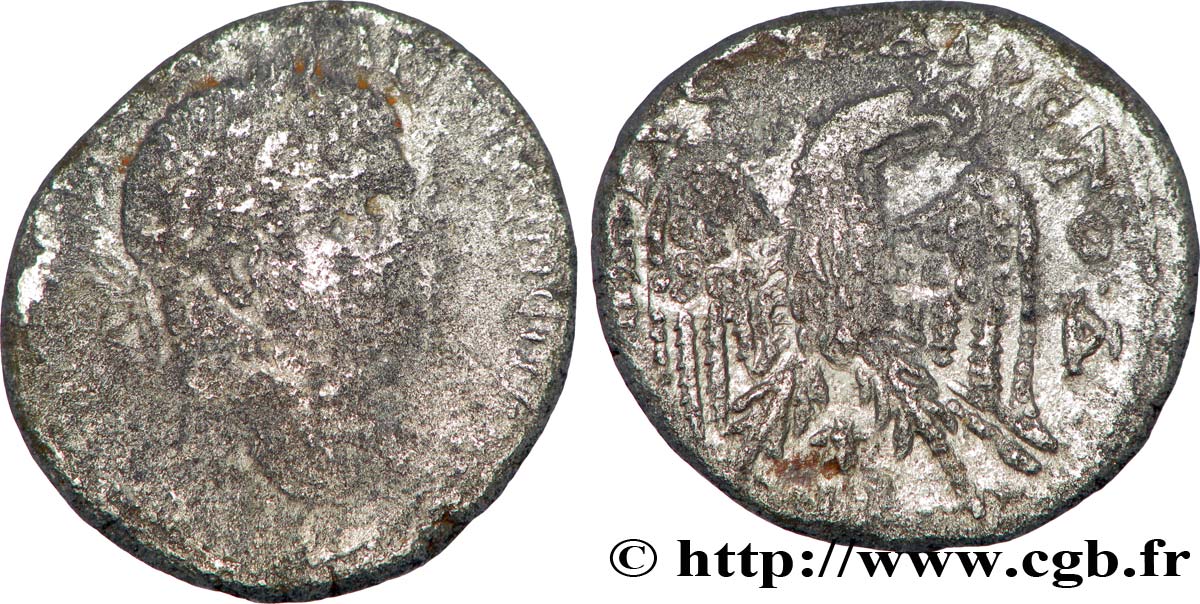
Type : Tétradrachme syro-phénicien
Datum: 215-217
Name der Münzstätte / Stadt : Antioche, Syrie, Séleucie et Piérie
Metall : Scheidemünze
Durchmesser : 25,00 mm
Stempelstellung : 12 h.
Gewicht : 10,01 g.
Seltenheitsgrad : R3
Kommentare zum Erhaltungszustand:
Très forte corrosion, surtout au droit mais exemplaire indiscutable
N° im Nachschlagewerk :
Pedigree :
Cet exemplaire est le 0243_003, il est du même coin de droit que les deux autres exemplaires connus
Vorderseite
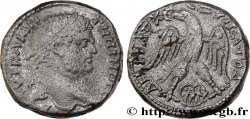
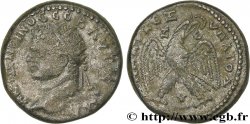
Beschreibung Vorderseite Tête laurée de Caracalla barbu à droite, du style d’Émèse, l’un des rubans de la couronne de laurier passant sur l’épaule.
Legende des Averses AUT. K. M. A. - ANTWNEINOS .SEB.
Übersetzung der Vorderseite (L’empereur césar Marc Aurèle Antonin auguste).
Rückseite
Beschreibung Rückseite Aigle à gauche, ailes écartées, tête et queue à droite, sur une corne d’abondance, une étoile le plus souvent difforme entre les pattes, et une couronne perlée de lauriers dans son bec.
Legende des Reverses : DHMARC EX UPATOSTOD
Übersetzung der Rückseite (Revêtu de la puissance tribunitienne consul pour la quatrième fois).
Kommentare
Le Prieur 243 se caractérise, outre la présence de la corne d’abondance entre les pattes de l’aigle, par le style de l’aigle du revers, au style de Laodicée, très statique avec le haut des ailes traité en petits cercles juxtaposés. et l’avers du graveur de Shamash, à Émèse.
À noter, Richard McAlee ne différencie par les styles et regroupe les Prieur 240 , 241, 242, 243 et 244 sous la seule référence 693.
Ces frappes énigmatiques, dites émissions de guerre, sont classées par convenance à Antioche, tant par Bellinger que par Prieur, bien que tous deux considèrent que cette attribution est certainement fausse. La meilleure preuve est la disparition sur ces émissions du Delta Eta dans le champ de revers, spécifique à Antioche et que l’on y retrouve inchangé sous Macrin et Diaduménien. On pense donc à des ateliers militaires itinérants, suivant les légions et frappant à la demande. Ces émissions sont particulièrement intéressantes et mal connues, une recherche des liaisons de coins et une typologie des graveurs pourrait améliorer la connaissance des ateliers militaires à cette période.
Les caractéristiques communes de ces émissions de guerre sont un style peu recherché, des symboles nouveaux et difficiles à attribuer à un atelier particulier, souvent des graveurs répertoriés pour des ateliers bien connus où, en revanche, on ne trouve aucune émission de guerre. Souvent, des frappes de graveurs différents mais de symboles identiques ont été regroupées alors qu’une analyse des liaisons de coins montrera peut-être qu’il s’agit en fait de plusieurs séries nettement séparées.
On remarquera, à propos des émissions de guerre en général, qu’aucune n’est connue à l’effigie de Macrin, le contraire étant la règle pour pratiquement toutes les séries identifiées pour des villes. C’est une preuve supplémentaire que ces séries sont exclusivement liées à la guerre parthique, qui s’interrompt dès la prise du pouvoir par Macrin, et non à une ou des municipalités qui n’auraient pas encore été identifiées.
On note que les sigma sont gravés en C.
Dans la base TSP maintenue par Michel Prieur, trois exemplaires sont maintenant répertoriés dont un en musée, à Oxford.
The Prior 243 is characterized, besides the presence of the cornucopia between the eagle's legs, by the style of the eagle on the reverse, in the Laodicean style, very static with the top of the wings treated in small juxtaposed circles.. and the obverse of the engraver of Shamash, in Emesa.
Note that Richard McAlee does not differentiate between styles and groups the Prieur 240, 241, 242, 243 and 244 under the single reference 693..
These enigmatic strikes, called war emissions, are classified for convenience in Antioch, both by Bellinger and by Prieur, although both consider that this attribution is certainly false. The best proof is the disappearance on these issues of Delta Eta in the reverse field, specific to Antioch and which we find there unchanged under Macrinus and Diadumenian. We therefore think of itinerant military workshops, following the legions and striking on demand.. These issues are particularly interesting and poorly known; research into die links and a typology of engravers could improve knowledge of military workshops during this period..
The common characteristics of these war issues are an unsophisticated style, new symbols that are difficult to attribute to a particular workshop, and often engravers listed for well-known workshops where, on the other hand, no war issues are found.. Often, strikes by different engravers but with identical symbols have been grouped together, whereas an analysis of the die links will perhaps show that these are in fact several clearly separate series..
It should be noted, with regard to war issues in general, that none are known to bear the image of Macrinus, the opposite being the rule for practically all series identified for cities.. This is further proof that these series are exclusively linked to the Parthian War, which ended as soon as Macrinus took power, and not to one or more municipalities that have not yet been identified..
Note that the sigmas are engraved in C.
In the TSP database maintained by Michel Prieur, three examples are now listed, one of which is in a museum in Oxford.
À noter, Richard McAlee ne différencie par les styles et regroupe les Prieur 240 , 241, 242, 243 et 244 sous la seule référence 693.
Ces frappes énigmatiques, dites émissions de guerre, sont classées par convenance à Antioche, tant par Bellinger que par Prieur, bien que tous deux considèrent que cette attribution est certainement fausse. La meilleure preuve est la disparition sur ces émissions du Delta Eta dans le champ de revers, spécifique à Antioche et que l’on y retrouve inchangé sous Macrin et Diaduménien. On pense donc à des ateliers militaires itinérants, suivant les légions et frappant à la demande. Ces émissions sont particulièrement intéressantes et mal connues, une recherche des liaisons de coins et une typologie des graveurs pourrait améliorer la connaissance des ateliers militaires à cette période.
Les caractéristiques communes de ces émissions de guerre sont un style peu recherché, des symboles nouveaux et difficiles à attribuer à un atelier particulier, souvent des graveurs répertoriés pour des ateliers bien connus où, en revanche, on ne trouve aucune émission de guerre. Souvent, des frappes de graveurs différents mais de symboles identiques ont été regroupées alors qu’une analyse des liaisons de coins montrera peut-être qu’il s’agit en fait de plusieurs séries nettement séparées.
On remarquera, à propos des émissions de guerre en général, qu’aucune n’est connue à l’effigie de Macrin, le contraire étant la règle pour pratiquement toutes les séries identifiées pour des villes. C’est une preuve supplémentaire que ces séries sont exclusivement liées à la guerre parthique, qui s’interrompt dès la prise du pouvoir par Macrin, et non à une ou des municipalités qui n’auraient pas encore été identifiées.
On note que les sigma sont gravés en C.
Dans la base TSP maintenue par Michel Prieur, trois exemplaires sont maintenant répertoriés dont un en musée, à Oxford.
The Prior 243 is characterized, besides the presence of the cornucopia between the eagle's legs, by the style of the eagle on the reverse, in the Laodicean style, very static with the top of the wings treated in small juxtaposed circles.. and the obverse of the engraver of Shamash, in Emesa.
Note that Richard McAlee does not differentiate between styles and groups the Prieur 240, 241, 242, 243 and 244 under the single reference 693..
These enigmatic strikes, called war emissions, are classified for convenience in Antioch, both by Bellinger and by Prieur, although both consider that this attribution is certainly false. The best proof is the disappearance on these issues of Delta Eta in the reverse field, specific to Antioch and which we find there unchanged under Macrinus and Diadumenian. We therefore think of itinerant military workshops, following the legions and striking on demand.. These issues are particularly interesting and poorly known; research into die links and a typology of engravers could improve knowledge of military workshops during this period..
The common characteristics of these war issues are an unsophisticated style, new symbols that are difficult to attribute to a particular workshop, and often engravers listed for well-known workshops where, on the other hand, no war issues are found.. Often, strikes by different engravers but with identical symbols have been grouped together, whereas an analysis of the die links will perhaps show that these are in fact several clearly separate series..
It should be noted, with regard to war issues in general, that none are known to bear the image of Macrinus, the opposite being the rule for practically all series identified for cities.. This is further proof that these series are exclusively linked to the Parthian War, which ended as soon as Macrinus took power, and not to one or more municipalities that have not yet been identified..
Note that the sigmas are engraved in C.
In the TSP database maintained by Michel Prieur, three examples are now listed, one of which is in a museum in Oxford.
Historischer Hintergrund
CARACALLA
(27.05.196-08.04.217)
Augustus
Nach Getas Ermordung verfügte Caracalla die „damnatio memoriæ“ seines Bruders. Im Jahr 212 wurde die „Constitution Antoniniana“ verkündet. Alle Bewohner des Reiches wurden römische Bürger. Im folgenden Jahr unternahm er einen Feldzug in Germanien und errang viele Siege über die Deutschen, Iapygen und Goten. Er erhielt den Titel „Germanicus“. Das Ende der Herrschaft wurde im Jahr 215 durch die Währungsreform und die Gründung des Antoninianus markiert. Caracalla beginnt einen letzten Feldzug gegen die Parther. Er wird ermordet, nachdem er seine Vicennalia gefeiert hat.
 Berichten über einen Fehler
 Die Seite drucken
 Teilen meiner Auswahl
 Stellen Sie eine Frage
 Einlieferung/Verkauf
In Verbindung stehende Artikel
 Details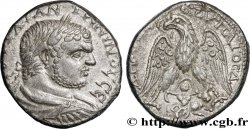



Ihre zuletzt angesehenen Artikel
100 Pounds Sterling NORTHERN IRELAND 1980 P.068a fVZ
230.00 €
LYONNAIS - ARCHEVÊCHÉ DE LYON - ANONYMES Denier fort ou double denier SS
52.00 €

CONSTANTINUS I DER GROßE Follis ou nummus fVZ/SS
70.00 €

MAROKKO 2 1/2 Dirhams (1/4 Rial) Abdul Aziz I an 1315 1897 Paris fVZ
45.00 €
FRANKREICH Belle Épreuve 10 Euro LE REDOUTABLE 2014
50.00 €

RUSSLAND 2 Kopecks Paul Ier 1800 Ekaterinbourg SS
40.00 €
cgbfr.de numismatik


