


fjt_072498 - LES CAISSES D'ÉPARGNE Jeton de la Caisse d’épargne de Nantes, poinçon abeille 1821

Nicht verfügbar.
Artikel auf unserem Online-Shop verkauft
Preis : 14.00 €
Artikel auf unserem Online-Shop verkauft
Preis : 14.00 €
Type : Jeton de la Caisse d’épargne de Nantes, poinçon abeille
Datum: 1821
Metall : Silber
Durchmesser : 28,5 mm
Stempelstellung : 12 h.
Rand lisse
Punze : (abeille) ARGENT
Kommentare zum Erhaltungszustand:
Exemplaire superbe avec de minimes traces de circulation
N° im Nachschlagewerk :
Vorderseite
Beschreibung Vorderseite Armes de Nantes dans une couronne formée de deux palmes.
Rückseite
Titulatur der Rückseite CAISSE/ D'ÉPARGNE/ DE/ NANTES// O.R. 21 JANVIER 1821.
Beschreibung Rückseite Légende en cinq lignes dans le champ.
Kommentare
Exemplaire avec le poinçon abeille sur la tranche. Les caisses d'épargne, imaginées au XVIIIe siècle, sont nées au XIXe siècle avec la Révolution industrielle et à la suite d'idées généreuses de protection de l'épargne des salariés et de rendre les économies productives tout en les mettant au service de la Nation. La première caisse d'épargne et de prévoyance est créée à Paris en 1818 puis cet exemple est suivi en province entre 1819 et 1823 à Bordeaux, Rouen, Marseille, Nantes, Brest, Metz, Le Havre, Lyon, Troyes, Reims, etc.. Dans les années 1830-1834, cinquante et une nouvelles caisses d'épargne sont créées tandis qu'en 1835, une loi vient les organiser. De 1835 à 1845, deux cent soixante-trois nouvelles caisses apparaissent, privées ou municipales. En 1870, le territoire compte cinq cent vingt-cinq caisses dont sept hors métropole. Les jetons et médailles des caisses d'épargne servent comme jetons de présence. La numismatique des caisses d'épargne a fait l'objet d'une étude d'Yves Jacqmin, Numismatique des caisses d'épargne privées (jetons et médailles), Paris : Le léopard d'or, 1987.
example with the bee hallmark on the edge. Savings banks, imagined in the 18th century, were born in the 19th century with the Industrial Revolution and following generous ideas of protecting employees' savings and making economies productive while putting them at the service of the Nation. The first savings and provident fund was created in Paris in 1818 and this example was followed in the provinces between 1819 and 1823 in Bordeaux, Rouen, Marseille, Nantes, Brest, Metz, Le Havre, Lyon, Troyes, Reims, etc. In the years 1830-1834, fifty-one new savings banks were created while in 1835, a law came to organize them. From 1835 to 1845, two hundred and sixty-three new banks appeared, private or municipal. In 1870, the territory had five hundred and twenty-five banks, seven of which were outside metropolitan France. Savings bank tokens and medals serve as attendance tokens. Savings bank numismatics was the subject of a study by Yves Jacqmin, Numismatics of Private Savings Banks (Tokens and Medals), Paris: Le polaire d'or, 1987
example with the bee hallmark on the edge. Savings banks, imagined in the 18th century, were born in the 19th century with the Industrial Revolution and following generous ideas of protecting employees' savings and making economies productive while putting them at the service of the Nation. The first savings and provident fund was created in Paris in 1818 and this example was followed in the provinces between 1819 and 1823 in Bordeaux, Rouen, Marseille, Nantes, Brest, Metz, Le Havre, Lyon, Troyes, Reims, etc. In the years 1830-1834, fifty-one new savings banks were created while in 1835, a law came to organize them. From 1835 to 1845, two hundred and sixty-three new banks appeared, private or municipal. In 1870, the territory had five hundred and twenty-five banks, seven of which were outside metropolitan France. Savings bank tokens and medals serve as attendance tokens. Savings bank numismatics was the subject of a study by Yves Jacqmin, Numismatics of Private Savings Banks (Tokens and Medals), Paris: Le polaire d'or, 1987
Historischer Hintergrund
LES CAISSES D'ÉPARGNE
Sparkassen, wie man sie sich im 18. Jahrhundert vorstellte, wurden im 19. Jahrhundert mit der industriellen Revolution geboren und verfolgten großzügige Ideen, die Ersparnisse der Mitarbeiter zu schützen und die Ersparnisse produktiv zu machen und sie gleichzeitig in den Dienst der Gesellschaft zu stellen. Nation. Der erste Spar- und Vorsorgefonds wurde 1818 in Paris gegründet, dann folgte dieses Beispiel in den Provinzen zwischen 1819 und 1823 in Bordeaux, Rouen, Marseille, Nantes, Brest, Metz, Le Havre, Lyon, Troyes, Reims usw. In In den Jahren 1830-1834 wurden 51 neue Sparkassen gegründet und 1835 wurde ein Gesetz zu ihrer Organisation erlassen. Von 1835 bis 1845 entstanden zweihundertdreiundsechzig neue private oder kommunale Fonds. Im Jahr 1870 verfügte das Gebiet über 525 Fonds, davon sieben außerhalb des französischen Festlandes. Als Teilnahmegebühr dienen Sparkassenmarken und -medaillen. Die Numismatik der Sparkassen war Gegenstand einer Studie von Yves Jacqmin, Numismatik privater Sparkassen (Tokens und Medaillen), Paris: Le Leopard d'or, 1987.
 Berichten über einen Fehler
 Die Seite drucken
 Teilen meiner Auswahl
 Stellen Sie eine Frage
 Einlieferung/Verkauf
In Verbindung stehende Artikel

 Details



Ihre zuletzt angesehenen Artikel
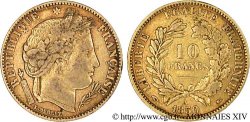
10 francs Cérès Deuxième république, Levrette oreille haute 1850 Paris F.504
96.00 €

LOUIS XIII Demi-écu, buste drapé et cuirassé (2e buste de Jean Warin) 1643 P
755.00 €
cgbfr.de numismatik


