


Live auction - fjt_1129617 - BRETAGNE (NOBLESSE DE...) Jean Baillon, maire de Rennes, Lebret intendant 1757

Sie müssen angeschlossen sein und von cgb.fr genehmigt werden, um in einer E-Auktion teilzunehmen.Melden Sie sich an, um zu wetten..Die Kontobestätigungen sind innerhalb von 48 Stunden nach Ihrer Anmeldung gemacht.Warten Sie nicht bis die letzten zwei Tage vor dem Abschluss eines Verkaufs, um Ihre Registrierung abzuschließen. Klickend "BIETEN" verpflichten Sie sich vertraglich, diesen Artikel zu kaufen und Sie nehmen ohne Reserve die allgemeinen Verkaufsbedingungen für den live auctions zu cgb.fr an.
Der Verkauf wird an der Zeit auf der Übersichtsseite angezeigt geschlossen werden. Angebote, die nach der Schließung Zeit empfangen sind, werden nicht gültig.
Bitte beachten Sie, dass die Fristen für die Einreichung Ihres Angebots auf unsere Server können variieren und es kann zur Ablehnung Ihres Angebots entstehen, wenn es in den letzten Sekunden des Verkaufs gesendet wird. Die Angebote sollen mit ganzer Zahl ausgeführt sein, Sie können Kommas oder des Punktes in Ihrem Angebot nicht erfassen. Bei Fragen klicken Sie hier, um einen Blick auf die FAQ Live-Auktionen.
Alle Gewinngebote unterliegen einem Aufschlag von 18 % für Verkaufskosten.
Alle Gewinngebote unterliegen einem Aufschlag von 18 % für Verkaufskosten.
 Schliessungsdatum
 Type : Jean Baillon, maire de Rennes, Lebret intendant
Datum: 1757
Metall : Silber
Durchmesser : 28 mm
Stempelstellung : 6 h.
Gewicht : 7,33 g.
Rand cannelée
Seltenheitsgrad : R2
Kommentare zum Erhaltungszustand:
Patine grise hétérogène, légèrement irisée. Quelques légers points d’usure
N° im Nachschlagewerk :
Vorderseite
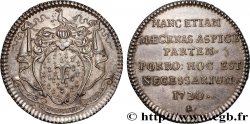
Titulatur der Vorderseite TALIBUS AUSPICIIS FLOREBIT AEDIL. RHED. 1757.
Beschreibung Vorderseite Les armes de Monsieur Lebret, Intendant de Bretagne.
Übersetzung der Vorderseite L'Edile de Rennes fleurira sous de tels auspices.
Rückseite
Titulatur der Rückseite DE LA MAIRIE DE M. BAILLON.
Beschreibung Rückseite Les armes de la ville de Rennes.
Kommentare
Jean Baillon fut maire de Rennes de 1743 à 1757 et Sénéchal de Rennes, Intendant de la ville de La Rochelle, Dijon et Lyon.
Cardin-François-Xavier Lebret (1719-1765) est seigneur de Flacourt, de Pantin et Comte de Selles. Ses armes portent d’or, au sautoir de gueules cantonné de quatre merlettes de sable, à l'écusson en coeur d'argent, chargé d'un lion de sable, armé et lampassé de gueules. Il est le fils de Cardin Le Bret, intendant de Béarn et de Provence. Chevalier de Malte, il est avocat du Roi au Châtelet de Paris en 1740, avocat général au Grand Conseil puis avocat général au parlement de Paris en 1746. Il devient intendant de Bretagne le 17 avril 1753 et meurt en fonction en 1765. Les "maîtres des requêtes du roi" devinrent au XVIe s. des "commissaires départis pour l'exécution des ordres du roi" puis dès 1625 des "intendants de justice, police et finances, commissaires départis pour l'exécution des ordres du roi". Inspecteurs et administrateurs, les intendants surveillaient les officiers de justice, avaient la haute main sur l'ordre public, les troupes, les subsistances. Ils travaillaient aussi avec le Contrôleur général des finances pour les questions économiques et les impôts. Chaque généralité comptait un intendant. Ils furent supprimés en 1789.
Jean Baillon was mayor of Rennes from 1743 to 1757 and Seneschal of Rennes, Intendant of the towns of La Rochelle, Dijon and Lyon.
Cardin-François-Xavier Lebret (1719-1765) is lord of Flacourt, of Pantin and Count of Selles. His coat of arms is gold, with a saltire gules quartered by four sable martlets, with an escutcheon in a heart argent, charged with a lion sable, armed and langued gules. He is the son of Cardin Le Bret, intendant of Béarn and Provence. Knight of Malta, he was King's lawyer at the Châtelet of Paris in 1740, attorney general at the Grand Council then attorney general at the Parliament of Paris in 1746. He became intendant of Brittany on April 17, 1753 and died in office in 1765.. The \\\"masters of the king's requests\\\" became in the 16th century. \\\"commissioners appointed for the execution of the king's orders\\\" and then from 1625 \\\"intendants of justice, police and finance, commissioners appointed for the execution of the king's orders\\\". Inspectors and administrators, the intendants supervised the officers of justice, had control over public order, troops, and subsistence.. They also worked with the Comptroller General of Finance on economic matters and taxes.. Each generality had a steward. They were abolished in 1789
Cardin-François-Xavier Lebret (1719-1765) est seigneur de Flacourt, de Pantin et Comte de Selles. Ses armes portent d’or, au sautoir de gueules cantonné de quatre merlettes de sable, à l'écusson en coeur d'argent, chargé d'un lion de sable, armé et lampassé de gueules. Il est le fils de Cardin Le Bret, intendant de Béarn et de Provence. Chevalier de Malte, il est avocat du Roi au Châtelet de Paris en 1740, avocat général au Grand Conseil puis avocat général au parlement de Paris en 1746. Il devient intendant de Bretagne le 17 avril 1753 et meurt en fonction en 1765. Les "maîtres des requêtes du roi" devinrent au XVIe s. des "commissaires départis pour l'exécution des ordres du roi" puis dès 1625 des "intendants de justice, police et finances, commissaires départis pour l'exécution des ordres du roi". Inspecteurs et administrateurs, les intendants surveillaient les officiers de justice, avaient la haute main sur l'ordre public, les troupes, les subsistances. Ils travaillaient aussi avec le Contrôleur général des finances pour les questions économiques et les impôts. Chaque généralité comptait un intendant. Ils furent supprimés en 1789.
Jean Baillon was mayor of Rennes from 1743 to 1757 and Seneschal of Rennes, Intendant of the towns of La Rochelle, Dijon and Lyon.
Cardin-François-Xavier Lebret (1719-1765) is lord of Flacourt, of Pantin and Count of Selles. His coat of arms is gold, with a saltire gules quartered by four sable martlets, with an escutcheon in a heart argent, charged with a lion sable, armed and langued gules. He is the son of Cardin Le Bret, intendant of Béarn and Provence. Knight of Malta, he was King's lawyer at the Châtelet of Paris in 1740, attorney general at the Grand Council then attorney general at the Parliament of Paris in 1746. He became intendant of Brittany on April 17, 1753 and died in office in 1765.. The \\\"masters of the king's requests\\\" became in the 16th century. \\\"commissioners appointed for the execution of the king's orders\\\" and then from 1625 \\\"intendants of justice, police and finance, commissioners appointed for the execution of the king's orders\\\". Inspectors and administrators, the intendants supervised the officers of justice, had control over public order, troops, and subsistence.. They also worked with the Comptroller General of Finance on economic matters and taxes.. Each generality had a steward. They were abolished in 1789
Historischer Hintergrund
BRETAGNE (NOBLESSE DE...)
 Berichten über einen Fehler
 Die Seite drucken
 Teilen meiner Auswahl
 Stellen Sie eine Frage
 Einlieferung/Verkauf
In Verbindung stehende Artikel
 Details




Ihre zuletzt angesehenen Artikel

BRETAGNE (NOBLESSE DE...) Jean Baillon, maire de Rennes, Lebret intendant VZ
60.00 €
cgbfr.de numismatik


